Get Full Government Meeting Transcripts, Videos, & Alerts Forever!
Get email alerts on the Instrumentation And Reporting topic
No spam. Unsubscribe anytime.
NRCS to resume Utah Water Availability Updates, add reservoirs and expand telemetry; sensor upgrades 85% complete
Summary
NRCS said it will resume monthly water‑availability reports under a rebranded 'Utah Water Availability Updates,' add 12 reservoirs to reporting, work with water‑rights authorities to instrument reservoirs for real‑time data, and has completed telemetry at Woodruff Creek; snow‑depth sensor replacements are about 85% complete.
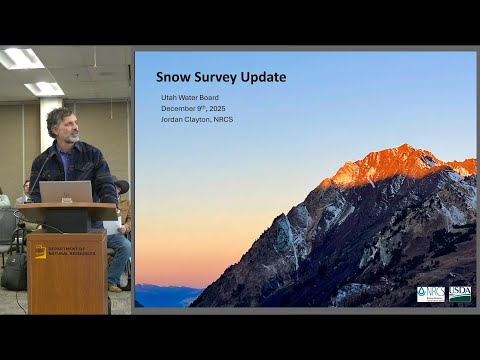
Jordan Clayton, supervisor of the Utah Snow Survey at the U.S. Natural Resources Conservation Service, announced a set of operational changes intended to improve real‑time monitoring and public reporting of water resources.
Clayton said NRCS will resume summer and fall monthly water reports (the last report issued in May) under the new name Utah Water Availability Updates and will add 12 reservoirs to the publication. The presenter noted the 12 reservoirs were selected because they have ‘‘excellent data records’’ and accessible current data; the transcript did not list the specific reservoir names.
On telemetry, Clayton said NRCS is ‘‘working with water rights to instruments and reservoirs around the state, so we can get real time data,’’ and he reported that telemetry work at Woodruff Creek is already complete, enabling year‑round readings at that site. He attributed the telemetry partnerships to cooperation with water‑rights authorities and data partners.
Clayton also described a field‑instrumentation upgrade: older Judd snow‑depth sensors are being replaced with newer sensors that perform better during storms — the upgrade is about 85% complete, he said. He explained that the older sensors tended not to work reliably during storms, which is when the data are most needed.
Clayton closed by inviting questions and thanking the meeting organizers for including NRCS on the agenda.