Get Full Government Meeting Transcripts, Videos, & Alerts Forever!
Get email alerts on the Ai Adoption And Open Source topic
No spam. Unsubscribe anytime.
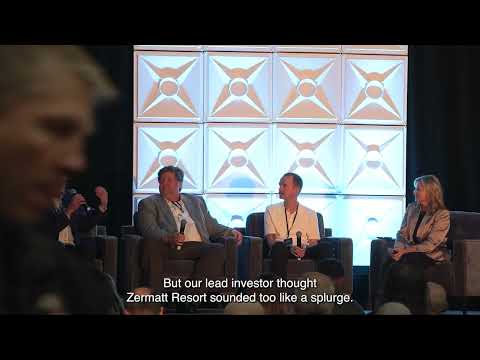
AI panel at Utah Business and Commerce urges experimentation, open‑source and ‘vibe coding’
Summary
At a Utah Business and Commerce panel, three AI practitioners urged rapid experimentation, open‑source ecosystems and workforce training as keys to applying AI. Panelists described projects from citizenportal.ai to an open‑source AI operating system and warned leaders to prioritize iteration over all‑or‑nothing fixes.
A panel at the Utah Business and Commerce conference brought three AI practitioners together to press a simple point: experiment fast, keep people central, and lean on open source.
Paul, CEO and co‑founder of Soar AI, said his company citizenportal.ai is working to transcribe public meetings across the United States, extract topics and generate articles so citizens can stay informed. “We’re the first company I think in history to try to transcribe every public meeting in The United States,” Paul said, describing the project as a response to declining local news coverage.
Travis, a longtime open‑source and Python contributor, framed open source as the foundation that made modern AI possible and raised the practical question of how to sustain that work financially. “Open source creates some externalities…how do you fund it?” Travis asked, arguing the community and new business models must evolve to make open‑source AI sustainable.
Andrew, who described work on projects including Cartwheel (AI animation tools) and earlier contributions at OpenAI, emphasized the productivity gains that come from empowering individual researchers. He said his team runs many concurrent experiments on dedicated hardware: “We host all of the training infrastructure in my shed,” Andrew said, noting that owning compute has let a small science team shorten the time from hypothesis to experiment to a day.
Panelists used the term “vibe coding” to describe fast, iterative prompt‑driven development and urged organizations to break large problems into smaller, testable components. Travis warned that models can be “sycophantic” and recommended human feedback and staged iteration to avoid overreliance on a single pass of automated output.
The discussion covered concrete tools and partnerships: Travis spoke about Navarre OS, an open‑source applied AI operating system, and named partnerships with Red Hat and IBM as examples of ecosystem collaboration. Paul described short, intensive training approaches to spread skills quickly within organizations.
The panel closed with practical advice: learn more math, start small and iterate, and use AI intentionally to amplify individual strengths. Moderator remarks and audience questions underscored the practical bent of the session — how leaders, engineers and managers can move from concept to measurable business outcomes without replacing workers outright.
Moderator Sid closed the session by thanking the panelists for a conversation that emphasized people, experimentation and the need to pair powerful models with clear human oversight.