Company developing AI-driven prosthetics describes real‑time sensing and emotional impact
Summary
Biologic Input Output Systems said it uses AI to translate nerve signals into lifelike movement and sensory feedback, sampling nerve data at high frequency; a company example described a prosthetic enabling a user to feel a spouse's touch.
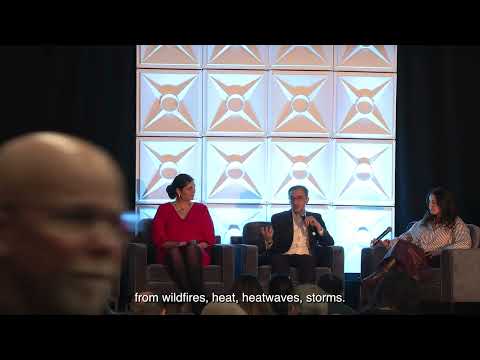
Tim Miller, chief development officer of Biologic Input Output Systems (Bios), described the company’s work on devices that translate the language of the brain into control signals for the body in real time, using AI to process very high‑frequency neural data.
Miller said the systems sample nerves “at 30,000 times a second” and process tens of thousands of megabytes per minute, which would be impossible to analyze without AI. He said those data feed models that generate lifelike movement and can even return sensation to a user.
“Someone was able to hold his wife's hand and actually feel her touch through a robotic hand,” Miller said, describing an emotional user result that moved people in the room to tears. He framed the work around alleviating suffering for amputees and people with neuropathy and chronic pain, saying the goal is to make disabilities “no longer a disadvantage.”
Miller and other panelists placed the work in a pro‑human AI context: technology that augments human capability and improves quality of life rather than replacing human judgment. The panel did not present clinical trial data or peer‑reviewed studies; Miller’s remarks described device capabilities and company experience to date.
AI generated
The text on this page is AI generated. Summaries, highlights, analysis, and video transcripts are all produced from the original source material.
AI can make mistakes, so if you spot one, and we will fix it for everyone.
Note: the source content is unaltered by us. Any content source we link to, be it a video, an audio recording, or a document, is presented exactly as its publisher released it. That publisher is usually a government body, sometimes an individual official or another organisation.