
U.N. chief: Aid gains in Gaza 'fragile' as IPC report shows hunger eased but 1.6 million still at extreme risk
Get AI-powered insights, summaries, and transcripts
Subscribe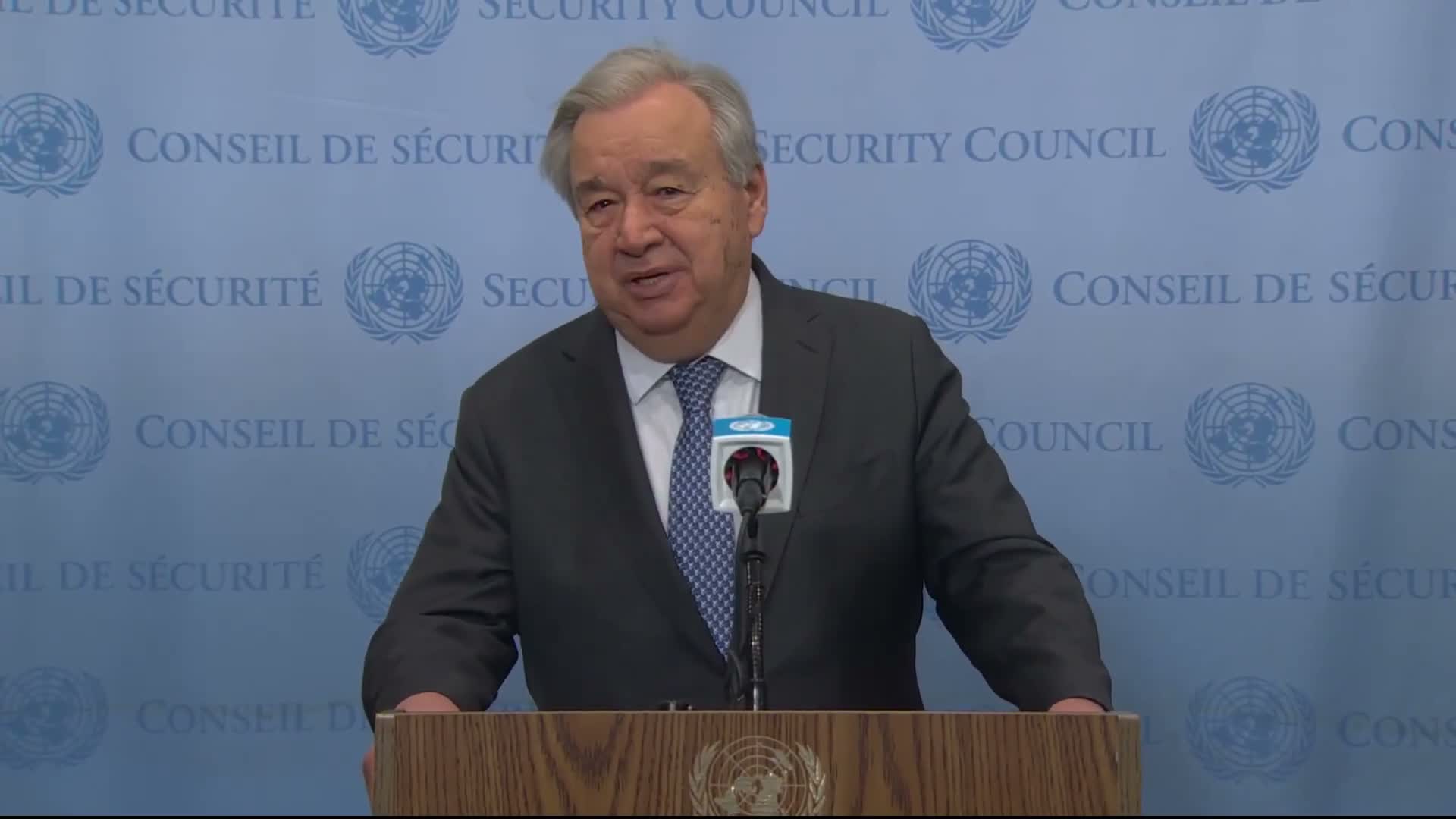
Summary
U.N. Secretary-General said the latest IPC food-security report shows famine has been pushed back and that the U.N. is delivering more than 1.5 million hot meals daily, but warned that about 1,600,000 people in Gaza—over 75%—remain at extreme risk and urged a durable ceasefire and unhindered humanitarian access.
The United Nations Secretary‑General told reporters that the latest IPC food‑security report shows some progress in Gaza but stressed that the gains are fragile and that far more must be done to protect civilians.
"Famine has been pushed back," the Secretary‑General said, adding, "we are preparing more than 1,500,000 hot meals every day" and delivering general food assistance packages across Gaza. He warned that despite those efforts "1,600,000 people in Gaza, more than 75 percent of the population, are projected to face extreme levels of acute food insecurity and critical malnutrition risks."
The Secretary‑General described degrading conditions across the territory: clean water is reaching more communities and some health facilities have reopened, but winter storms have flooded tents and damaged structures, humanitarian services are struggling to recover from destruction and supply shortages, and restrictions on what can enter Gaza remain a key obstacle. He said parts of Gaza are inaccessible where troops remain deployed and that ongoing strikes and hostilities continue to push the civilian toll higher and expose humanitarian teams to grave danger.
Listing U.N. activities since October, he said the organization has supported bakeries, delivered millions of meals, reopened nutrition centres, rehabilitated hospitals, vaccinated children, cleared rubble and restored water lines, but that "needs are growing faster than aid can get in." He urged "a truly durable ceasefire," more crossings, the lifting of restrictions on critical items, the removal of red tape, safe routes inside Gaza, sustained funding and unhindered access for non‑governmental organizations.
On the legal front, the Secretary‑General cited measures from the International Court of Justice, saying the Court "indicated provisional measures. They are binding and must be implemented," and referenced the Court's advisory opinion of 22 October 2025 as a basis for the obligation to facilitate humanitarian aid and cooperate with the United Nations.
During the question period, Gabriel Elizondo of Al Jazeera English asked whether there was any reason not to move to phase 2 of the ceasefire agreement now, noting Israeli statements tying progress to the return of remains. The Secretary‑General replied that "it is essential to move to phase 2" and that there should be no pretext to avoid doing so, while also saying it is important to recover and return missing remains to families and to ensure that phase 1 — the ceasefire — is fully implemented as part of a broader peace process.
The briefing closed with a call for political will to end the "perverse and prolonged suffering" and a renewed appeal for a path toward a two‑state solution.