Get Full Government Meeting Transcripts, Videos, & Alerts Forever!
Get email alerts on the Housing topic
No spam. Unsubscribe anytime.
Rochester council clears Enclave Development rezoning and plan amendment for downtown apartment project amid public concern about affordability
Summary
Council unanimously approved a comprehensive plan amendment (CD2025‑004) and zone change (CD2025‑005) for a 2.04‑acre downtown site to allow a 4–7 story general‑occupancy apartment project; public commenters raised concerns that the project is market‑rate only and could displace long‑time affordable units.
The Rochester City Council unanimously approved a comprehensive plan amendment and zone change Dec. 8 that will allow Enclave Development to pursue a 4–7 story, general‑occupancy apartment project on a 2.04‑acre site near Center Street and 6th Avenue SE.
Desmond McGill of the Community Development Department told the council the applicant is requesting to change the land‑use designation from medium‑density residential to high‑density (R4) in the Destination Medical Center urban center. Planning staff and the development review team recommended approval, saying the proposal supports transit corridors, increases housing supply near Mayo Clinic and aligns with the city’s plan to add approximately 4,600 general‑occupancy and senior units by 2035.
At the public hearing Kenna Wallace urged preservation of long‑standing affordable housing on Center Street (the Richards House) and questioned whether a 100% market‑rate project would relieve housing pressures. Patrick Grama, representing Enclave Development, confirmed the project is proposed as market rate, described an earlier project the company completed (First & Banks) and explained the 4‑ to 7‑story stepdown approach to respect adjacent lower‑density neighborhoods.
Council discussion focused on density, vacancy rates and housing diversity. Staff supplied vacancy figures and cited the recently updated Maxfield 2025 housing study as part of the rationale for more multifamily units downtown. Councilmember Fredericks said he was sensitive to the loss of truly affordable housing but ultimately supported the change to add downtown density to support businesses.
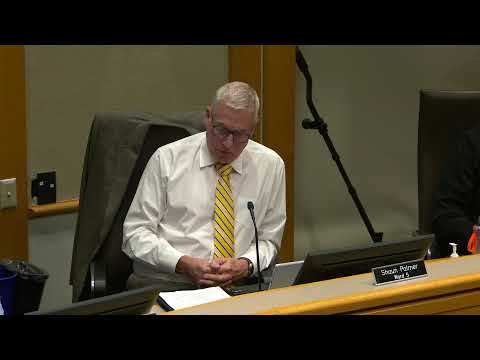
The motions: Councilmember Palmer moved to adopt a resolution approving CPA CD2025‑004 (Palmer moved; Keane seconded); the motion passed 7–0. Councilmember Palmer next moved to approve zone change CD2025‑005 (Palmer moved; Fredericks seconded); the motion passed.
What to watch: Staff and applicants will return with project design and any development agreements; the public and council members flagged affordability and potential loss of small historic units as issues to track.
Quote: “I would like to quote our house’s namesake... Please keep Rochester’s housing affordable and save its beautiful history,” public commenter Kenna Wallace said, urging preservation of Richards House and neighborhood character.
Next steps: The applicant will proceed with site‑level design and subsequent permitting steps under the approved comprehensive plan and zoning classification.