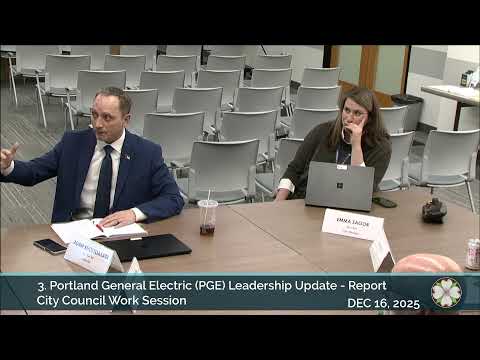
Portland General Electric outlines grid stress, battery deployments and data‑center implications to Milwaukie council
Loading...
Summary
PGE representatives described rising summer loads, battery storage deployments and new rate structures for data centers; they said batteries add operational flexibility, cited roughly 500 MW of battery capacity in several zones, and explained a three‑year rolling rate review intended to allocate infrastructure costs to large new loads.
Portland General Electric officials briefed Milwaukie councilors on electricity system changes, resilience measures and rate policy. PGE said increasing adoption of heat pumps, electric vehicles and new large industrial or data‑center customers is changing load profiles and stressing transmission and distribution capacity in some areas.
"We now installed 500 megawatts for the batteries," the utility presenter said, describing battery projects in multiple zones that provide short‑term energy capacity and greater operational flexibility.
PGE also discussed recent legislative and regulatory work on data centers. The presenter described a new class and a rolling review process (referenced in the meeting as related to "2377") that would allow the utility and regulators to reallocate infrastructure costs so new, large loads help fund needed upgrades over time. The utility said the mechanism is not a one‑time payment: the three‑year review is intended to reassess load and cost responsibilities on a recurring basis.
On customer affordability, PGE said an income‑qualified bill‑discount program enrolls about 72% of eligible households in the referenced service area but that outreach could capture an estimated 11,300 additional eligible customers. "72% of your households that are eligible are taking advantage of it right now," the presenter said.
Council members pressed PGE on storm‑recovery costs and why some repair or recovery expenses are reflected in customer bills rather than absorbed by the company. PGE representatives explained they plan and budget for storm work and maintain reserves, but extreme or numerous events may exceed budgeted amounts and require cost recovery mechanisms that are subject to regulatory review.
Councilors also raised concerns about right‑of‑way fee communications and the potential rate impacts of adding major projects into the system if data centers and other large loads fail to pay commensurate shares of upgrade costs. PGE said the policy intent is to align cost responsibility and to use tools such as internal borrowing or loan programs to mitigate immediate rate impacts where possible.
PGE offered to follow up with detailed rate‑setting conversations and to return for a separate briefing on tariffs and climate policy options.
What happens next: PGE will provide more detailed data on rates and the data‑center policy mechanics at follow‑up sessions and coordinate with city staff on outreach for affordability programs.