
State Sen. Paige Wally visits Chester County, urges support for public schools and cautions on voucher expansion
Get AI-powered insights, summaries, and transcripts
Subscribe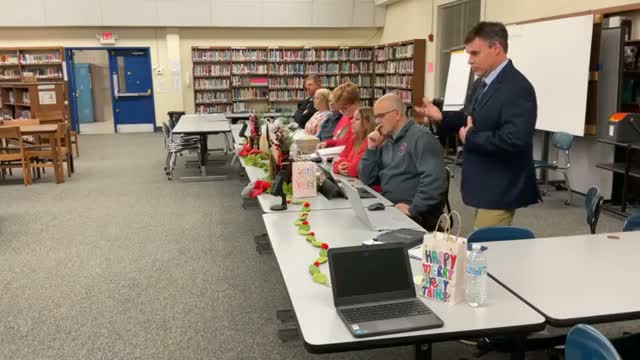
Summary
Tennessee state senator Paige Wally visited the Chester County School Board to reaffirm support for fully funding public schools, criticize recent private‑school voucher expansion and outline infrastructure and budget priorities heading into the 2026 legislative session.
Sen. Paige Wally, who represents Senate District 26, told the Chester County School Board on Monday that fully funding public education is essential to the republic and warned against expanding private‑school voucher programs without clearer outcomes. "We have to fully fund and resource our public schools," Wally said, adding that recent voucher legislation and its $7,000 payments merit closer scrutiny.
Wally said a state comptroller’s audit due in January is likely to raise questions about how voucher funds were used and which students actually benefited. He said the state distributed roughly 20,000 vouchers last year and that his concern is many vouchers will be claimed by families already enrolled in private schools rather than by students leaving low‑performing public schools. "One of the things that troubled me was we're not gathering any information on what becomes of this 20,000," he said.
The senator outlined competing budget pressures ahead of the 2026 session, noting that inflation and rising costs for teachers, roads and water systems limit the state’s capacity to add new recurring commitments. He urged residents to contact their legislators — including state representative Kurt Casement — about priorities, and offered to brief the board as the session begins in January.
Wally also described challenges to road funding tied to a flat gas tax (last adjusted in 2017) and the increasing prevalence of fuel‑efficient and electric vehicles, which reduce gas‑tax revenues. He said state leaders are exploring mechanisms such as surcharges on electric vehicle charging or reallocating certain sales taxes (for example, on tires) toward road maintenance to sustain a user‑funded model for roadwork.
Board members asked about pre‑K funding and special education components. Wally said he is a proponent of early childhood supports but cautioned that recurring funding will be difficult to secure this year; he described a constituent case that revealed gaps and delays in early intervention services as part of his argument for better responsiveness in those systems.
Wally closed by noting the 2026 election cycle — including a new governor and a full House up for election — and the need for local advocacy. "If you have thoughts on [vouchers], agree, disagree, whatever it is, I'd love to hear from you," he said. He wished the board a Merry Christmas and offered to return with legislative updates when the session convenes.
The visit occupied a substantial portion of the board meeting; Wally discussed education finance, transportation funding, infrastructure needs and constituent services but did not propose or request formal board action during his remarks. The board thanked him and moved on to regular agenda business.