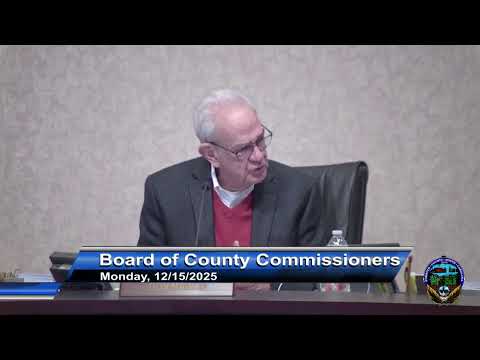
Commissioners debate procurement policy and MWBE language as staff warn of capacity and legal limits
Loading...
Summary
Forsyth County staff proposed an updated procurement policy to improve planning, competition and compliance; commissioners extensively debated thresholds for formal bidding, requirements for services, construction manager at‑risk specifications, and how to embed MWBE (HUB) outreach and aspirational goals given statutory constraints and staff capacity.
County finance staff and the county attorney presented an updated countywide procurement policy to the Board of Commissioners on Dec. 15 intended to align county practice with state purchasing law, strengthen oversight and encourage planned procurement.
CFO Terry Goodman said the policy aims to balance the county's statutory responsibilities, stewardship of taxpayer dollars and operational needs of departments. "Management's expectations within this policy are that procurement be planned and managed throughout the year," Goodman said.
Commissioners pressed staff on several specifics: when informal quotes should escalate into formal bids (several commissioners asked for clearer numeric thresholds rather than guidance like "consider"), whether service contracts should be bid formally or remain informally negotiated, and how narrow or prescriptive specification language should be.
County Attorney Gordon Watkins repeatedly cautioned that certain proposed preferences for MWBE/HUB participation could exceed county authority without additional legal work, including a disparity study. "If we were to try to get to that part, we would need to have a disparity study," Watkins said, noting such studies can cost hundreds of thousands of dollars and may be required to support enforceable goals or set‑asides.
Purchasing Manager Darren Redfield said the purchasing office is under capacity strain: "I have 7 staff... we went from 56 bids two years ago to 95 bids last year and we're on track for more than 95." He said staff are actively hiring to increase capacity but recommended retaining flexibility for informal service procurements to allow negotiation and best value.
Several commissioners, including those advocating for more MWBE emphasis, urged adding clearer language to require broader outreach and to record good‑faith efforts. One commissioner, who identified recent training to become an economic inclusion officer, proposed aspirational countywide MWBE participation goals in the 20–25% range and a reporting dashboard to increase transparency; staff said current statutory construction goals default to 10% without a disparity study and that county construction reporting meets or exceeded that level in recent years.
Manager Chantelle Robinson and legal staff recommended narrowing the update to reflect what the county can legally implement now and to return to the board with clearer side‑by‑side comparisons of proposed changes, staff resource impacts and legal constraints before final adoption.
The board did not adopt the policy during the briefing; staff were asked to make clarifying edits, provide detailed comparisons of proposed changes, and return with materials for the formal meeting.