
Board of Regents approves UNL budget reductions, eliminating and realigning several programs
Get AI-powered insights, summaries, and transcripts
Subscribe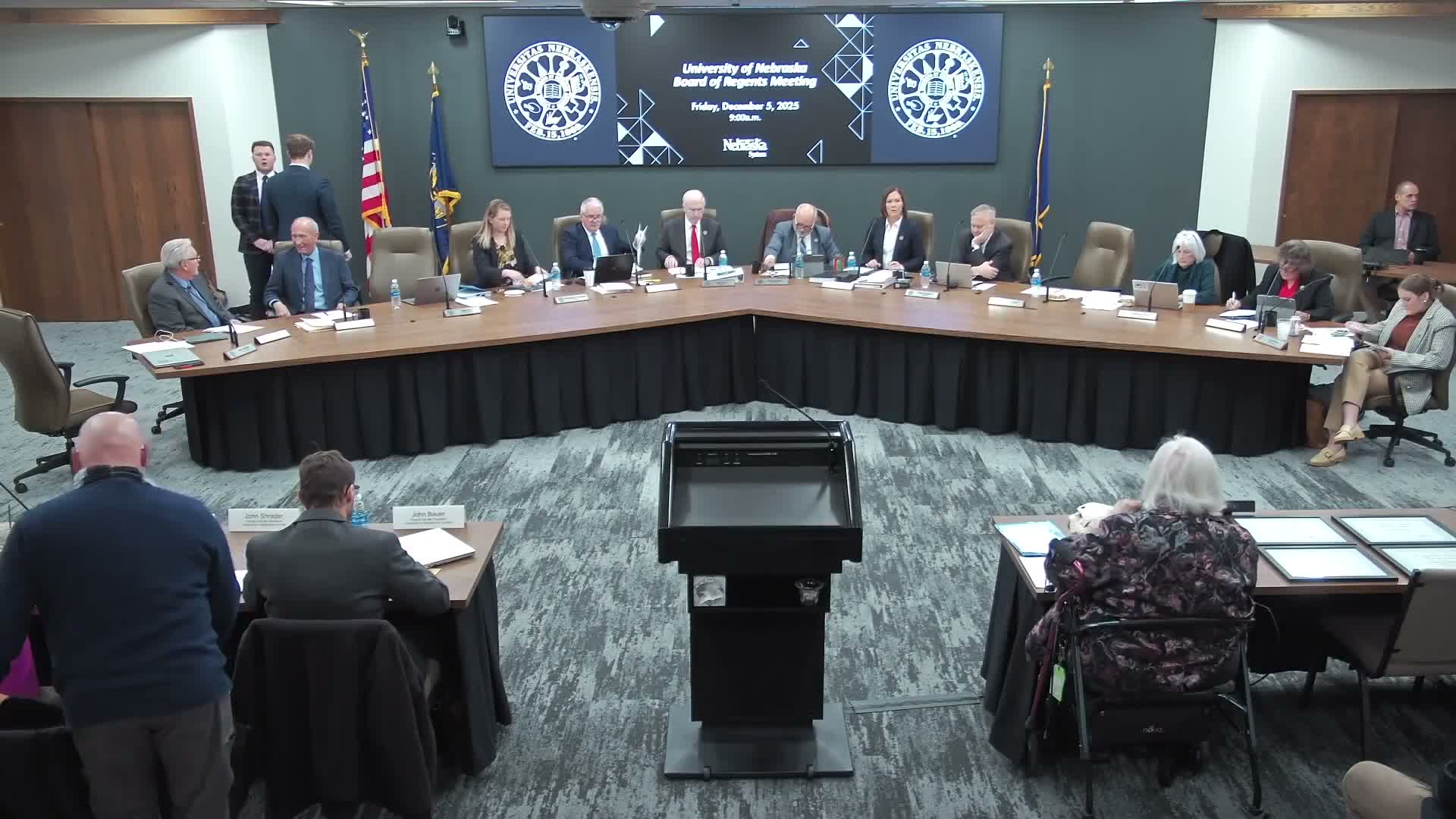
Summary
The University of Nebraska Board of Regents voted Dec. 5 to approve a package of budget reductions at UNL that eliminates or reorganizes multiple academic departments as part of a plan to close a structural deficit. Dozens of faculty, students and alumni had urged the board to pause and reconsider.
The University of Nebraska Board of Regents on Dec. 5 approved a package of budget reductions at the University of Nebraska–Lincoln designed to close a recurring structural deficit. The actions include eliminating the Department of Earth and Atmospheric Sciences, the Department of Educational Administration, the Department of Statistics and the Department of Textiles, Merchandising and Fashion Design and approving a set of reorganizations within the Institute of Agriculture and Natural Resources, the board said.
Regent motions and roll-call votes were taken after more than six hours of public comment. Chancellor Rodney Bennett told the board the recommended cuts were the result of a prescribed campus metrics process and said the university is “burning through our cash reserves” and must act immediately to preserve long-term viability. President Jeffrey P. Gold and the chancellor said the changes follow the campus’s shared-governance procedures and were intended to be the least harmful options that achieve required savings.
Supporters of the cuts and the administration said the measures are necessary to keep the university solvent. “We cannot continue to spend beyond our means,” Chancellor Bennett said, asking the board to approve the plan to eliminate UNL’s structural deficit.
Opponents warned of long-term damage to research, workforce pipelines and public-safety capacity. Susan Van der Plas, an associate professor of statistics, told the Regents: “These budget cuts are based on data that was analyzed and interpreted badly,” and urged them to reject elimination of her department. Faculty, alumni and business leaders also said removing the Earth and Atmospheric Sciences program would leave Nebraska without an in-state pathway to train meteorologists and geologists that state agencies and employers rely on.
The board approved the motions after debate. The university said students enrolled in affected majors will be assigned transition coordinators to help complete degrees or identify alternate pathways; the administration also said it will attempt to preserve required coursework and certification routes where possible. The university packet notes each elimination is expected to realize specific annual savings toward UNL’s reduction targets.
Several Regents urged continued engagement with the Legislature and other partners to address longer-term revenue gaps. Multiple speakers at the meeting and many written comments asked the Regents to delay action to allow more time for alternatives to be developed; the board majority concluded the pace of reserve depletion required an immediate vote.
What happens next: UNL will begin implementation steps and provide transition coordinators for affected students; faculty and staff reductions and detailed teach-out plans will be developed according to university procedures. The board also approved several business and facilities items at the meeting, including donor‑funded projects and athletics contracts.
The Regents meeting adjourned after final remarks recognizing the emotional and practical toll of the decisions on students, faculty and staff.