
Cheyenne council reviews airport master plan update; consultants cite limited growth without added flights
Get AI-powered insights, summaries, and transcripts
Subscribe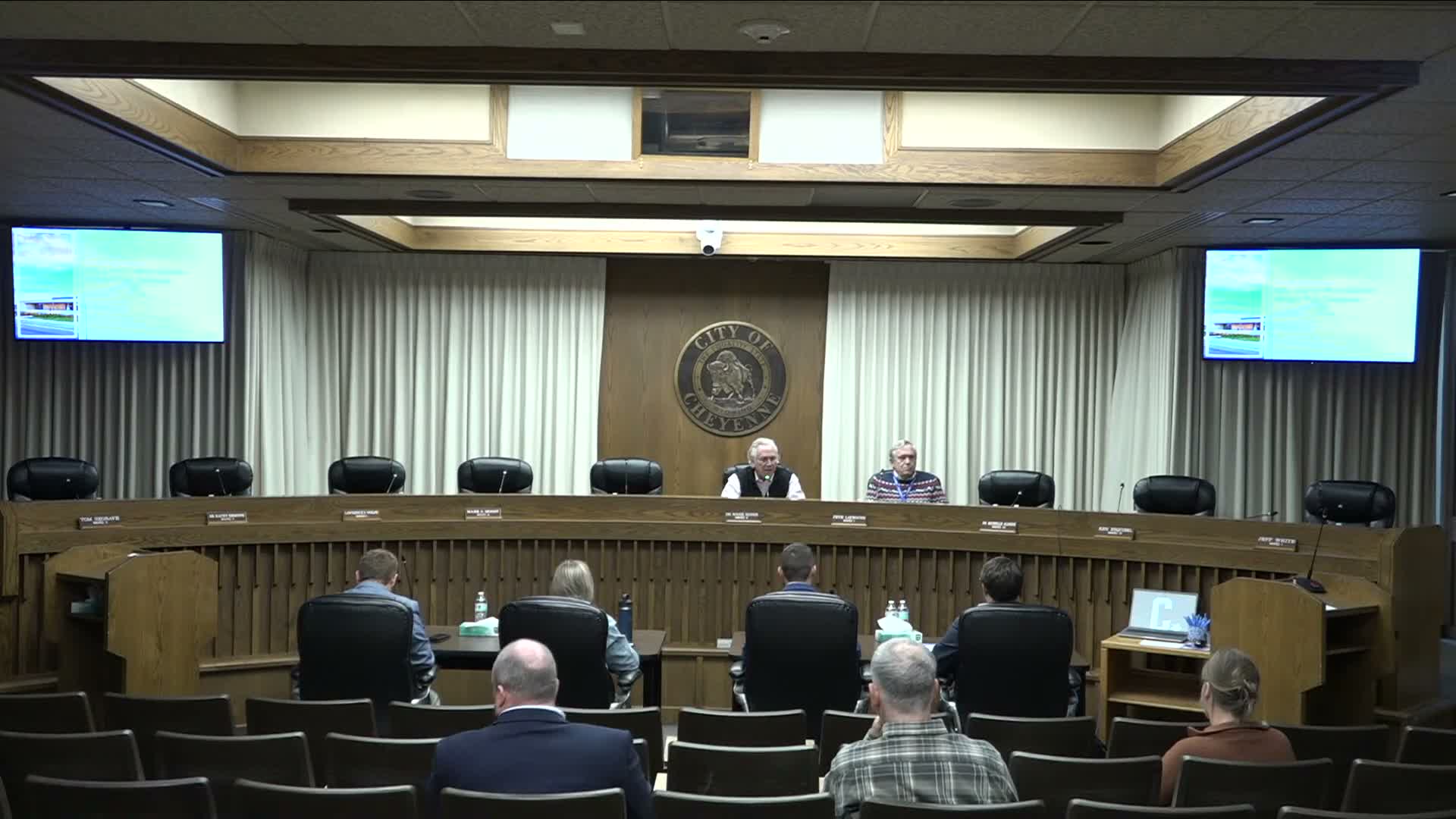
Summary
Consultants told the Cheyenne City Council that the airport’s master plan is three‑quarters complete and recommends projects tied to demand triggers over a 20‑year horizon, noting facilities are generally sound but some airfield and terminal elements are deficient. Councilors pressed on marketing, the old terminal and landscaping; no formal actions were taken.
Cheyenne — Consultants presenting an update on the Cheyenne airport master plan told the City Council on Dec. 12 that the airport’s physical assets are largely in good condition but that future growth is constrained unless airlines add seats or new routes.
The consultant team from InterVista, led by Steven Derangalski, said the 18‑month master‑plan update — about three‑quarters complete — uses FAA guidance and socio‑economic forecasts to identify short‑, medium‑ and long‑term projects, and links improvements to activity thresholds that will trigger investments. “Currently, right now at Cheyenne, there’s 56 based aircraft. We see that number jumping up to 64 over that 20 year planning horizon,” Derangalski said, summarizing the base forecast and two alternative scenarios that model a second hub or larger/ more frequent aircraft.
Why it matters: The plan sets the airport’s development priorities and spending framework for the next two decades and will shape grant requests, passenger‑facility charge proposals and marketing or air‑service efforts. Council members said they want clearer answers about who will fund and manage visible maintenance issues and how the city should support terminal reuse and marketing to attract more service.
Consultants described three demand scenarios. The base case tracks closely with the FAA’s terminal area forecast; an expansion scenario modeled a potential second hub or additional destination (used as an illustrative assumption, not a commitment); and a third scenario tested larger or more frequent aircraft (for example, moving from 50‑seat aircraft toward 75–100 seats). The team also noted that Cheyenne’s fleet mix and runway geometry drive airfield design choices, and that some FAA design elements now exceed current standards in locations where roads or other features penetrate safety zones.
Among technical findings, the team identified three notable airfield deficiencies: portions of the runway object‑free area and runway safety area are penetrated by local roads, some runway protection zones have encroachments, and a runway/taxiway marking for Runway 9/27 was measured about 12 feet too close to the runway environment. The presentation also flagged terminal‑area shortfalls — for example, the checked‑bag screening area that the consultants measured as about 15 square feet short — and recommended alternatives such as optimizing footprints or adding a baggage device as demand grows.
Funding and implementation items were discussed in questions. Derangalski said passenger facility charges (PFCs) are federal and typically range from $1 to $4.50; “the current rate is at $4.50 for the current market here at Cheyenne,” he said, and PFCs could be used for terminal or airfield upgrades. Director Bradshaw told council members the airport has pursued grants and has received Wyoming Cultural Trust Fund and DEQ grants to help preserve the old terminal, and that a steering committee and business plan are in place to study reuse, including a potential restaurant operator.
Councilors pressed several issues. Councilman Laybourne and others asked about landscaping and a parkway agreement near the airport; Derangalski said such property‑ownership or intergovernmental agreements fall outside the technical scope of the master plan, which focuses on facility needs. Councilman Lee and others expressed concern about the airport’s appearance and asked whether the council should review the airport board budget. Director Bradshaw said a recent passenger‑demand analysis shows Cheyenne loses most potential local traffic to Denver International Airport and that the airport has limited capacity to market flights that are already full: “it shows that we lose 97% of our traffic driving to Denver,” he said, and airports are constrained by airlines’ commercial decisions.
Next steps: The consultants said they are finalizing a preferred development plan and will complete environmental review, the financial analysis and an FAA‑reviewed airport layout plan. The team scheduled a technical advisory committee meeting in January and a public open house in February to present the preferred development plan, with the project aimed for completion in March. No motions or votes were taken during the work session.
Speakers quoted in this article appear in the meeting record as Director Bradshaw and InterVista consultant Steven Derangalski; council members who spoke include Councilman Laybourne, Councilman Lee, Councilman Esquivel, Councilman Seagrave and Councilman Moody.