Tennessee panel decertifies trooper after finding he sold state property
Loading...
Summary
The Tennessee Federal Commission voted to decertify Trooper Zachary Newton after the Department of Safety presented an investigation showing Newton admitted taking and selling state-owned equipment; commissioners raised concerns about missing ordinance inventory and regulated items ending up in the public sphere.
The Tennessee Federal Commission voted to decertify Trooper Zachary Newton after the Tennessee Department of Safety presented an internal investigation showing Newton admitted taking and selling state property.
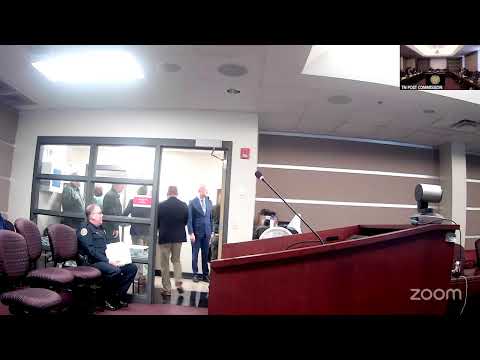
At the December informal hearing, Lieutenant Colonel Timothy Spicer said Newton’s termination followed an internal probe in which Newton admitted taking items without permission and selling them, including holsters and accessory parts. “During the investigation, Mr. Newton admitted to taking equipment without permission and selling state-owned property,” Spicer told the commission.
Rachel Reeder, an attorney for the department, told commissioners criminal charges were not pursued because Newton refused to meet with the department’s criminal investigative division and much of the material gathered during administrative review remained subject to confidentiality after appeals. The department’s presentation said some items recovered and returned during the investigation included suppressors and other ordinance items.
Newton and his counsel, Ben Wells, acknowledged Newton sold items but disputed that weapons were sold. Wells said Newton sold “two holsters” and that much of the remaining property had been returned during the investigation. Newton told the commission the proceeds were in the “ballpark of $1,000” and that he had offered to repay the money.
Commissioners pressed the department on inventory controls and on whether National Firearms Act–regulated items (suppressors) were adequately tracked. One commissioner flagged online postings discovered during a review of auction listings and noted an officer had posted ‘‘upper slide and barrel from a confiscated gun’’ for sale; the department acknowledged at least one confiscated item had been transferred in error and could not be recovered.
The commission’s motion for decertification passed after discussion of the department’s investigative record and internal controls. After the vote the commission advised counsel to meet with the commission’s investigator to learn next steps.
The department sought decertification on the basis of breach of trust and dishonesty tied to possession and sale of state equipment. Newton’s counsel emphasized distinctions between parts and complete weapons during argument and asked the commission to consider the context and that returned items and repayment had been offered. The commission concluded the evidence presented supported decertification.
The commission did not report any pending criminal convictions against Newton at the hearing. The commission did not list a criminal charge that had been filed; counsel said the department elected not to pursue criminal charges in the administrative process.