Get Full Government Meeting Transcripts, Videos, & Alerts Forever!
Get email alerts on the Procurement topic
No spam. Unsubscribe anytime.
Gateway Unified board considers resolution to allow lease-leaseback procurement for Shasta Lake project
Summary
The Gateway Unified board reviewed Resolution 25‑26‑13 to permit lease‑leaseback procurement for a Shasta Lake Schools construction project, with staff saying the method speeds preconstruction and phased DSA submissions. A motion was made and seconded; no final vote appears in the transcript.
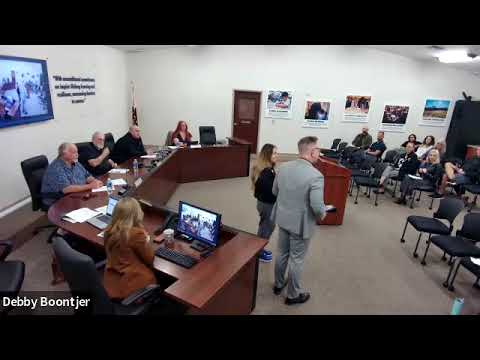
The Gateway Unified School District on Thursday discussed Resolution 25‑26‑13, which would permit the district to use a lease‑leaseback procurement method for construction work on the Shasta Lake Schools project. Board members heard from the project manager and district counsel about the reasons the district is considering the method and the procedural safeguards that would follow.
Project manager Liz Giles told the board lease‑leaseback can shorten schedules by allowing the district and contractor to work earlier on preconstruction tasks. ‘‘With the lease‑leaseback, it does offer us the opportunity to take kind of a phased approach to submitting to DSA,’’ Giles said, adding that early contractor involvement would let the district begin underground work sooner in coordination with the contractor.
District counsel (Speaker 8) clarified the scope of the resolution: "This resolution is simply allowing the district to say, lease leaseback is a method that we would potentially consider in the future," and said that approving the resolution would not by itself award contracts. Additional resolutions and separate contract approvals would be required for any specific project or contract.
Board members questioned whether the language should be limited to a single project or left as broader authorization for future projects. Supporters said the measure is a tool for schedule‑sensitive projects and that it had been used in 2011 and 2014. Members discussed a projected schedule that included submitting phased documents to DSA and a possible June groundbreaking for site work. A motion to proceed with the presented approach was made and seconded; the transcript does not include a recorded roll‑call vote on the resolution.
Next steps described in the presentation include issuing an RFQ/RFP for contractor selection, phased submission to the Division of the State Architect (DSA), and subsequent board approvals of specific contracts and scopes. The board did not finalize a vote on Resolution 25‑26‑13 in the recorded portion of the meeting.