
Board approves WDC oversight and contract to install rooftop solar at five Waterbury schools
Get AI-powered insights, summaries, and transcripts
Subscribe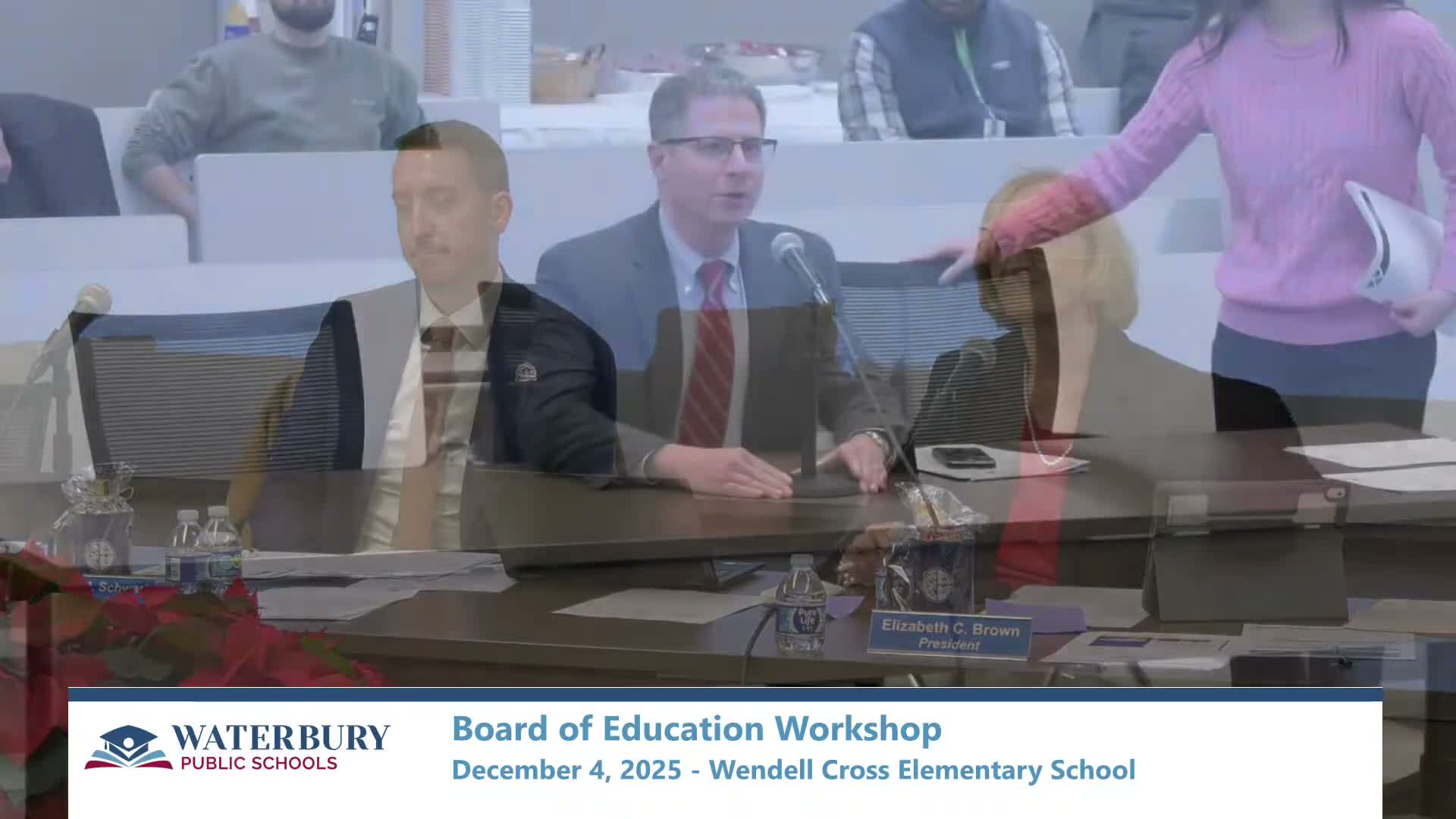
Summary
The Waterbury Board of Education authorized the Waterbury Development Corporation to manage rooftop solar projects and approved a $2.45 million design‑build contract for systems at five schools. Board members pressed for safeguards, structural testing and long‑term maintenance before final design and construction.
The Waterbury Board of Education authorized the Waterbury Development Corporation (WDC) to manage rooftop solar photovoltaic projects at five Waterbury Public Schools and approved a $2,450,000 design‑and‑build construction contract with All Electric and Communication LLC.
Supporters said the projects are largely funded by a Connecticut Department of Administrative Services (DAS) school construction grant and federal tax incentives. Robert Klee of Klee Sustainability Advisors told the board the DAS reimbursement covers roughly 78.9% of the cost and that the arrays participate in Eversource’s non‑residential clean energy program; he estimated first‑year payments to the city at about $230,000 and roughly $4.6 million in payments over 20 years under a buy‑all/sell‑all arrangement with the utility.
“The project overall cost is $2,450,000 and that money will be coming from the State of Connecticut Department of Administrative Services,” said Jim Nardozzi of the Waterbury Development Corporation. Robert Klee said the combination of DAS reimbursement and available federal incentives is expected to reduce or eliminate the city’s net construction cost and shorten the payback period.
Board members pressed presenters on site selection, structural and wind testing, warranty implications for recently reroofed school structures and oversight. Commissioners were told the five schools were chosen because they recently received new roofs through the DAS school construction process and that the contractor will use a ballasted system where appropriate to avoid roof penetrations. Presenters said structural engineers will perform and stamp load and wind tests during the final design phase and that an operations‑and‑maintenance contract will be procured to provide long‑term monitoring and repairs.
Some board members asked about prior solar work in the district. Nick Albini explained that Waterbury has two previously installed systems: one produced electricity but needs an inverter replacement, while another never operated and must be repaired. He said the city and district will seek an O&M contractor to monitor production and respond quickly to outages, minimizing the risk of long periods when arrays are not producing.
The board approved the consent calendar (which included the construction contract award) by voice vote. During a special meeting later, the board also voted to approve a project authorization letter (PAL) allowing WDC to administer and oversee the five school rooftop projects after a motion to table that PAL failed on a roll‑call vote.
Next steps spelled out by presenters include completion of final design, municipal approvals (including the Board of Aldermen and DAS), and construction aimed at capturing current federal incentives and meeting DAS deadlines. Presenters said liquidated damages are included in the contract to encourage timely completion and that routine structural and electrical tests are contract obligations prior to substantial completion.
The board did not set a new timeline beyond the procurement and DAS approval steps; presenters said the team hopes to begin construction in summer 2026 to meet incentive deadlines.