
District finance update: enrollment down ~470 FTE; board approves $500,000 short-term transfer
Get AI-powered insights, summaries, and transcripts
Sign Up Free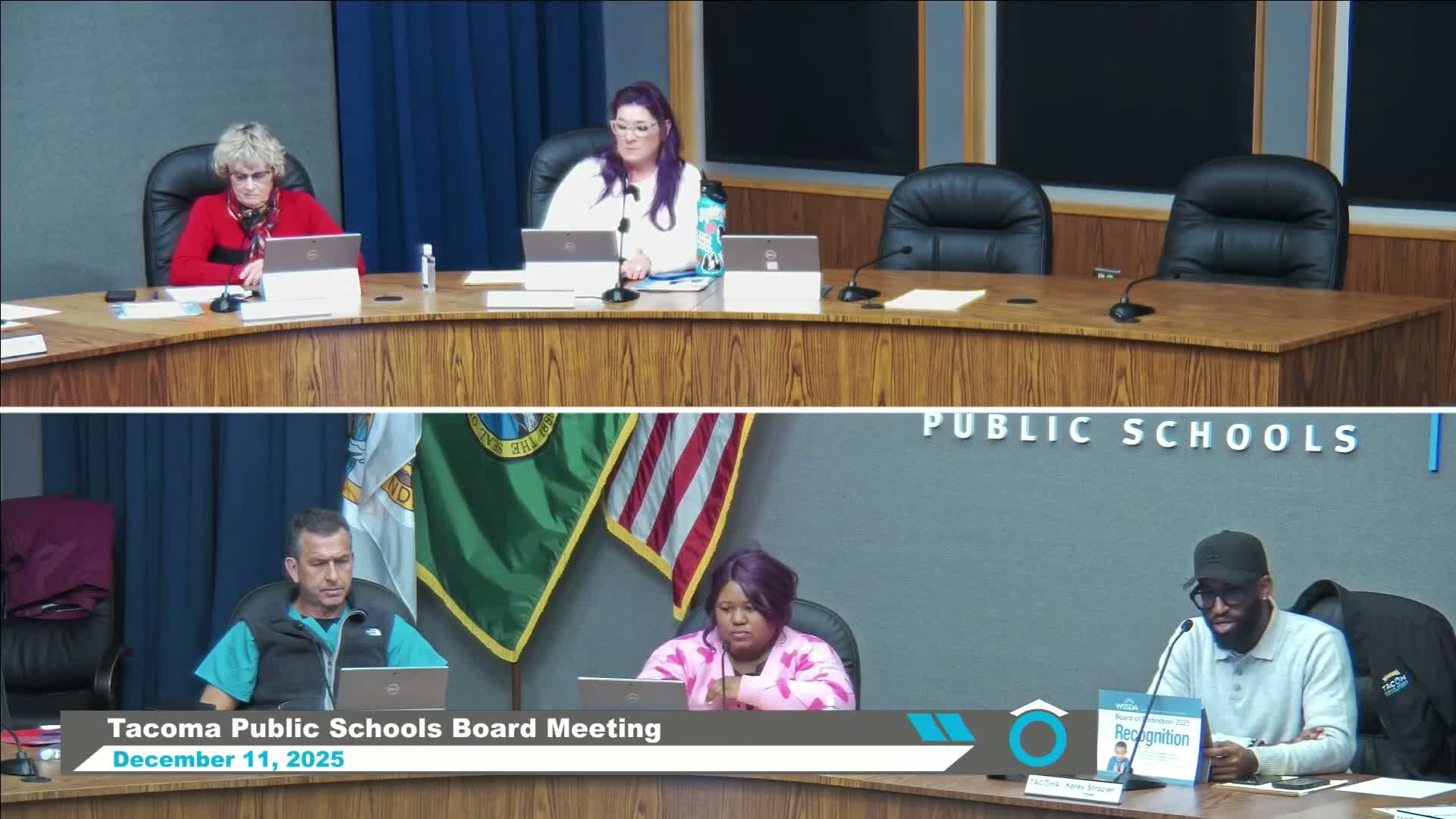
Summary
The district reported an estimated 470-student decrease in annual average FTE, lower-than-expected December levy receipts and tight fund balances. The board approved a $500,000 temporary transfer from Capital Projects to the Debt Service fund to cover bond payments until January.
Chief Financial Officer Ross told the board the district’s annual average FTE projection is down roughly 470 students, which reduces basic education revenue and tightens the general fund. Ross said special-education and CTE populations rose slightly but that the overall revenue decline is the dominant pressure.
Ross said December tax collections for levies were lower than trend and that debt-service receipts fell short after principal and interest payments went out Dec. 1. He said the treasurer temporarily covered the shortfall and staff recommended a short-term internal transfer to ensure debt payments are covered and cashflow remains stable.
At the meeting the board adopted resolution No. 2176 to approve a temporary transfer of $500,000 from the Capital Projects Fund to the Debt Service Fund, to be repaid by Jan. 31, 2026. Ross described the shortfall in the debt and fiscal fund as approximately $260,000 but emphasized that the proposed transfer would restore the fund and be repaid with interest when apportionment and tax receipts true up in January.
Board members asked questions about enrollment drivers, split/combined-grade classrooms and bargaining-language changes that affect how the district staffs multi-age classrooms. A parent speaker during public comment had urged the return of paraeducators to large combined-grade classes; board members acknowledged the classroom challenges and said staffing, funding and bargaining constraints complicate immediate fixes.
The board did not adopt program eliminations or school closures at this meeting; members discussed longer-term footprint reductions as one potential option if revenues continue to fall but said such moves would require a much broader process and analysis.