
VDOE reports declining teacher vacancies, cites state pay supplements and new grants to recruit and retain educators
Get AI-powered insights, summaries, and transcripts
Sign Up Free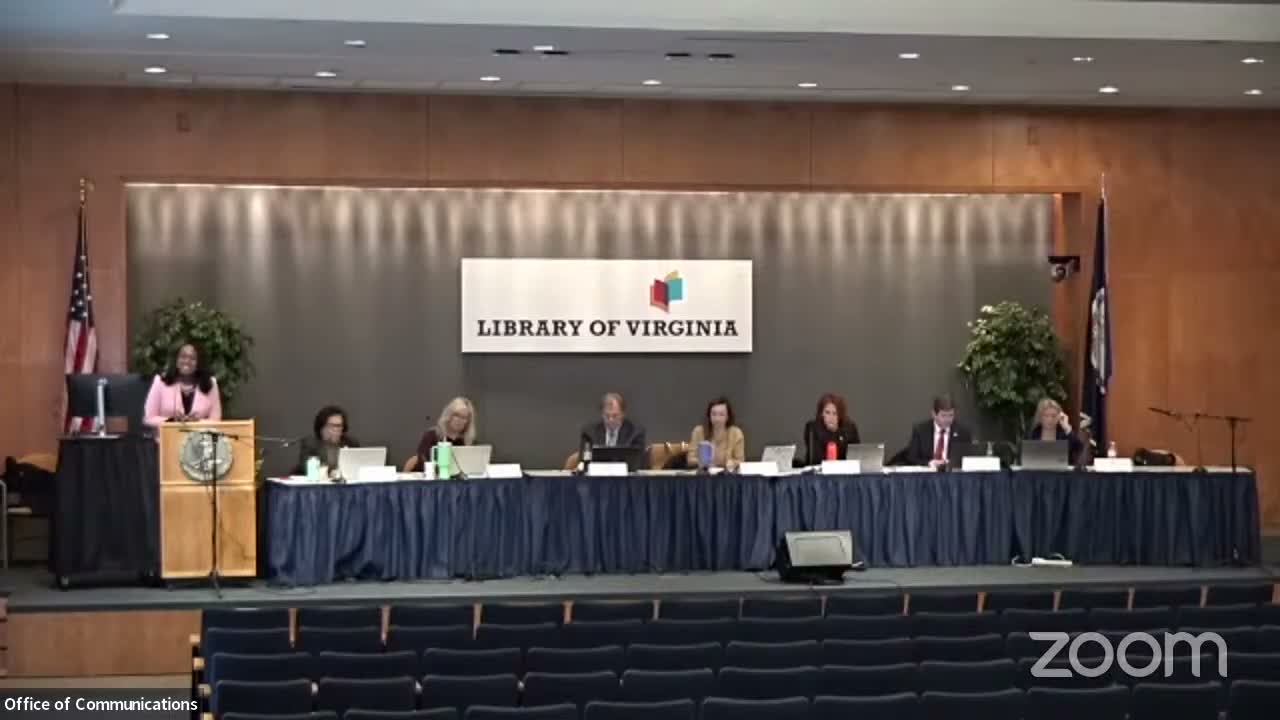
Summary
VDOE staff told the board that statewide teacher vacancies fell for a third consecutive year, attributed in part to expanded licensure pathways, state compensation supplements and targeted grants; officials said more analysis is planned on retention and mobility drivers.
Deputy Superintendent Tiara Booker Dwyer and Chief Christina Burda presented an update on teacher vacancies and compensation trends, telling the board that Virginia recorded a third consecutive year of declining teaching vacancies and that many divisions have increased salaries beyond the state—s supplements.
"For the third consecutive year, Virginia has decreased statewide teaching vacancies," Booker Dwyer said, noting a dashboard that allows users to drill down to regional and division data. The presenters said expanded licensure pathways (career-switcher routes, paraprofessional pipelines, residency and apprenticeship programs) and a suite of state-funded grants have helped ease entry barriers.
Burda summarized compensation action: the Commonwealth—s compensation supplements between fiscal years 2022 and 2026 represent a 23% increase in state-funded compensation and, with compounding, about a 25.27% change in funded pay, and teacher-specific increases of roughly 18% during the period. She said many localities added their own funding so that several divisions outpaced the statewide increase.
Officials listed grant programs intended to recruit and retain educators, including Virginia teaching scholarships and loans, a residency partnership grant, a $50,000 grant to support licensure-assessment fees, STEM recruitment and a $6 million state apprenticeship expansion fund. They also pointed to a state climate-and-working-conditions survey; Burda said about 90.6% of responding elementary and middle-school teachers reported they want to remain in the profession.
Board members asked whether movement out of the state is concentrated in military communities or reflects job choices; VDOE staff said some exits are linked to military relocations and that further coding and survey work will clarify reasons for mobility and retirement trends. The department also said it will provide deeper demographic breakdowns and continued regional snapshots for the January meeting.
What happens next: VDOE plans targeted technical assistance to school divisions, deeper analysis of retention drivers, and continued rollout of grants and professional supports for recruitment and retention.