Get Full Government Meeting Transcripts, Videos, & Alerts Forever!
Get email alerts on the Ballot Questions topic
No spam. Unsubscribe anytime.
Council holds public hearings on three Nov. 4 ballot questions; social districts draw mixed reaction
Summary
The council heard presentations and public testimony on a social district ballot question and on Keno/games of chance. The Economic Development Commission recommended cautious study; public commenters raised youth safety and taxpayer‑cost concerns. No council vote on the ballot items occurred — public hearings were held as required by statute.
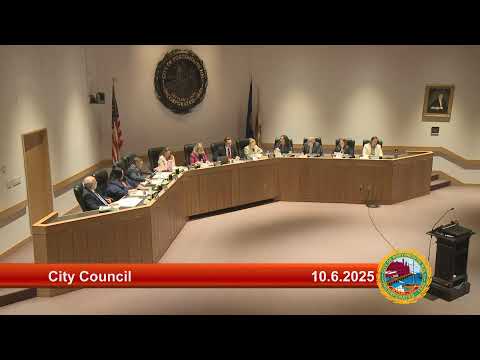
Portsmouth city staff and the Economic Development Commission (EDC) led public hearings Oct. 6 on three ballot questions slated for the Nov. 4 municipal election: (1) whether to allow social districts where people may consume alcohol outdoors, (2) whether to prohibit Keno, and (3) whether to prohibit games of chance (casino‑type table games).
Tom Watson, chair of the Economic Development Commission, summarized the EDC’s work on social districts, saying the commission polled local businesses, reached out to the New Hampshire Liquor Commission and county enforcement agencies, and found businesses were often unfamiliar with what a social district would look like in Portsmouth. Watson recommended there is no one‑size‑fits‑all solution and urged the council to treat the ballot question as a first step allowing the community to design a local approach if voters approve.
City staff (Attorney Ferney) outlined the statutory definition of a social district and the city’s responsibilities if voters approve: the council would design site‑specific plans and a management and maintenance plan, ensure signage (including Liquor Commission contact information), adopt rules on hours and disposal of beverage containers, and submit any plan to the New Hampshire Liquor Commission.
Public testimony was mixed. Amy Michaels, representing the Greater Portsmouth Youth Wellness Coalition, urged voters to reject social districts, saying visible public alcohol consumption risks normalizing drinking for youth and citing state youth drinking statistics. Pat Bagley said the ballot question is vague and leaves voters without clear information about potential costs to public works or police services.
On Keno and games of chance, staff explained the legal framing: the new law changes ballot language so a council‑sponsored question now asks voters whether the city should prohibit these activities. Eli Sarcarellos spoke in favor of allowing Keno, saying proceeds support early‑education funding and that local small businesses and fraternal organizations can benefit.
No final council action on the ballot questions was taken; the hearings satisfy the statutory requirement that a public hearing be held between 30 and 15 days before the election. Councilors thanked the EDC and staff for research and noted implementation details would fall to a future council if voters approve the social district question.
Next steps: Hearings are closed and ballot questions will appear on the Nov. 4 municipal ballot; if voters approve a social district, the council would later develop specific plans and forward them to the NH Liquor Commission for administrative review and rule compliance.