Get Full Government Meeting Transcripts, Videos, & Alerts Forever!
Get email alerts on the Safe Schools Resolution topic
No spam. Unsubscribe anytime.
Parents and advocates urge Wake County board to pass ‘safe schools’ resolution after ICE activity
Summary
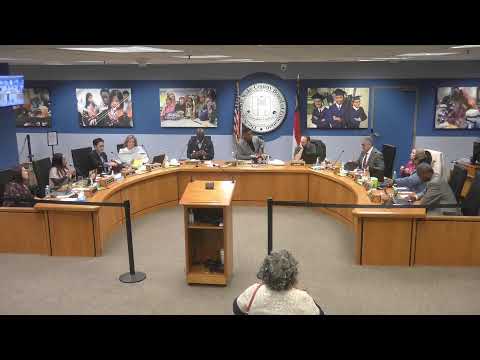
Multiple public commenters at the Dec. 2 Wake County Board meeting urged the board to adopt a safe‑schools resolution to protect undocumented students and families after recent ICE activity; the superintendent said the district recorded about 11,000 additional absences on the day agents were in the community.
A series of parents, students and organizers urged the Wake County Board of Education on Dec. 2 to adopt a ‘safe schools’ resolution to protect undocumented students and mixed‑status families after recent immigration enforcement activity in the region.
Speakers from Education Justice Alliance, parents and volunteers described fear in the community, argued that fear undermines learning, and asked the board to adopt clear policy language and staff training. Miguel Figueroz (parent organizer) cited Plyler v. Doe — the U.S. Supreme Court ruling guaranteeing children access to public education regardless of immigration status — and said the right is hollow if students fear attending school. Emily Malpass and others asked the board to explicitly reinforce legal limits on federal immigration agents’ access to school properties, mandate staff training, review bullying policies, and improve communications with families.
Several speakers described local impacts: Mira Butalia said attendance has dropped and families are losing income; Superintendent Dr. Robert Taylor said his data showed “an additional 11,000 students that were absent” on the day agents were reported to be in the community and emphasized schools are supporting families. Advocates said a resolution would be both symbolic and practical — signaling protection and backing staff to act in ways that prioritize student safety and trust.
Board responses: multiple board members thanked the speakers and said they would discuss how best to support families, communicate with staff, and consider policy steps. Some board members noted legal constraints and pointed to the need to balance communication and adherence to state and federal law.
Why it matters: absence and fear in the community can depress learning outcomes; advocates say a district resolution and clearer staff guidance could reduce fear and encourage attendance. Superintendent Taylor framed the district’s role as ensuring adherence to law while supporting affected families.
Provenance: public comments recorded in the Dec. 2 meeting and the superintendent’s attendance/absence data statement are the basis for this report.