Get Full Government Meeting Transcripts, Videos, & Alerts Forever!
Get email alerts on the Immigration Enforcement topic
No spam. Unsubscribe anytime.
Parents tell Wake County board immigration enforcement is driving absences; superintendent promises legal guidance and supports
Summary
Multiple parents and community members told the Wake County board Nov. 18 that ICE and CBP activity is causing student trauma and absences; Superintendent Robert Taylor said district messaging reiterates legal protections for students, referenced Plyler v. Doe, and directed school leaders to consult legal counsel before allowing enforcement access to campuses.
Several parents and community members used the public-comment period at the Nov. 18 Wake County Board of Education meeting to urge the district to take stronger steps to protect students and staff amid recent immigration-enforcement activity.
Irene Godinez, a parent, said the fear of deportation is producing "toxic stress" that drives attendance declines and harms learning. She called on the board to adopt a "non punitive attendance policy" during enforcement surges, provide temporary flexible learning options, and implement mandatory district-wide training so every adult in every school knows how to recognize valid warrants, protect student data under FERPA and de-escalate encounters. "Compassion alone isn't enough. We need district wide preparedness," Godinez said.
Other speakers echoed those concerns about educator safety and student trauma. Liz Tatum asked the board to speak publicly for immigrant educators and to protect language-immersion programs; Emily Gaeta urged Fourth Amendment workplace protections for schools and flexible learning during enforcement periods. Amanda Paolone and other parents described children asking how to respond if unidentified armed people arrive at a school, and cited research linking enforcement operations to spikes in absences.
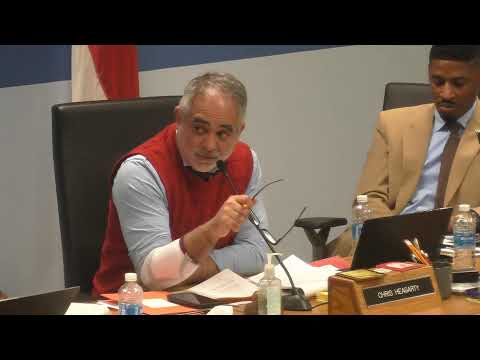
In his superintendent comments later in the meeting, Superintendent Robert Taylor acknowledged the uncertainty and stress created by enforcement actions, cited the Supreme Court's Plyler v. Doe decision as legal grounding for educating children irrespective of immigration status, and said the district will continue to follow federal and state law while honoring student privacy. Taylor said building leaders were reminded of "strict procedures that law enforcement agencies must follow when interacting with students on our school property" and that, "Should immigration enforcement personnel seek to access a campus, our building leaders will immediately consult with legal counsel." He encouraged families experiencing social-emotional needs to contact their schools and student services teams.
Board members praised district communications and urged continued focus on counseling and community outreach. Several board members described the fear and trauma inflicted on students as a barrier to learning and asked staff to provide clear guidance and supports. The board did not take any formal policy vote on attendance or additional protections at the meeting but directed staff to continue outreach and training work described in their communications.