Get Full Government Meeting Transcripts, Videos, & Alerts Forever!
Get email alerts on the Technology Policy topic
No spam. Unsubscribe anytime.
Policy committee advances technology responsible‑use and internet safety policies with edits on AI, consequences and student privacy
Summary
The committee reviewed Policies 32.25 and 32.26, discussed removing explicit 'generative AI' text in favor of 'technology guidelines,' narrowing punitive examples in consequences language, and debated model language limiting capture/sharing on district devices. Staff and board agreed to return redlines and advance both policies to a Dec. 16 action agenda.
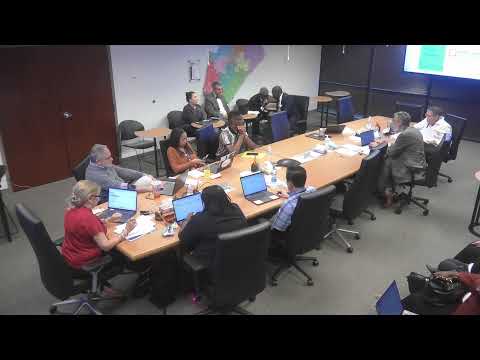
Wake County Schools staff and board members spent the committee’s longest discussion on Policies 32.25 (Technology Responsible Use) and 32.26 (Internet Safety), covering statutory requirements, privacy protections, AI guidance and consequences for misuse.
Staff framed the edits as a mix of legally required changes, board‑association model language and local practice updates. "Blue is staff; red reflects state or board association suggested edits," said the technology presenter. The committee discussed three areas in depth: (1) use agreements and generative AI wording, (2) the consequences section’s tone and specific disciplinary examples, and (3) privacy and capture/sharing rules tied to district‑owned devices.
On AI, staff recommended striking specific references to "generative AI" and replacing them with the broader term "technology guidelines," so the policy will reference technology guidance without embedding a single evolving set of AI rules. Board members asked that staff return with separate, classroom‑level guidance addressing when and how students and teachers may use AI and how it should be cited in assignments.
On consequences, staff proposed removing language that listed extreme outcomes ("up to and including long‑term suspension" or "dismissal for employees") and instead use broader wording: violations "may result in appropriate remedial actions or disciplinary consequences and may result in revocation of user privileges." Several board members supported that change to avoid redundancy with the code of student conduct and to leave proportional disciplinary decisions to existing policies and administrative processes.
Privacy and image‑capture: staff introduced North Carolina School Board Association model language that would bar students from using district technology to capture or share images or recordings that personally identify other students or employees without consent from those individuals and the principal or designee, with listed exceptions (public performances, classroom instruction). Staff stressed the proposed restriction applies to district‑owned devices, not students' personal phones; board members debated whether that scope would effectively prevent misuse when personal devices are often the medium for problematic conduct.
Internet safety (Policy 32.26) updates reflect statutory changes (transcript: Session Law '20 25 dash 38') requiring that websites and web applications used by the district protect students’ personal information; staff described vendor review procedures, disabling chat where necessary, and COPPA compliance checks.
The committee voted to bring both policies to action at the Dec. 16 board meeting with the revisions discussed and asked staff to provide redlines and links (for example, a hot link to the code of student conduct where cited).
Next steps: staff will return redlines with recommended wording to: (a) replace generative‑AI references with 'technology guidelines', (b) edit consequences language to remove specific extreme outcomes, and (c) clarify the scope and exceptions for district‑device capture/sharing rules.