Get Full Government Meeting Transcripts, Videos, & Alerts Forever!
Get email alerts on the Child Nutrition topic
No spam. Unsubscribe anytime.
Policy committee advances child nutrition policy after staff explain how district covers unpaid meal charges
Summary
Committee reviewed changes to Policy 62.20 to align with statute and to remove language saying negative meal balances would be carried forward. Staff said federal rules require CNP accounts not carry bad debt; the district currently budgets about $45,000 and reported roughly $118,000 in negative balances. The policy was moved to Dec. 16 consent.
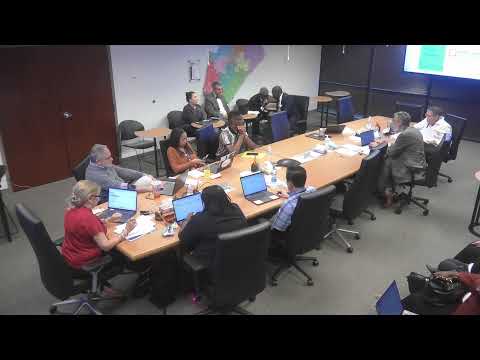
The Wake County Schools Policy Committee reviewed proposed revisions to Policy 62.20 on Nov. 19 that update the district’s approach to unpaid student meal charges and align the policy with state and federal requirements.
CNS staff explained the principal change is removal of a sentence that said negative student account balances would be carried forward to the next school year. "That language now exists in statute, so we're including it in our policy," a CNS presenter said, and staff described the mechanics: the Child Nutrition Program (CNP) zeroes out negative balances at year‑end and the district becomes responsible for the amounts as locally funded debt.
Why it matters: the deletion could be misread to imply debt is erased. Committee members asked staff to add clarifying language specifying that while CNP accounts are cleared for program accounting, the district assumes the debt and the superintendent will pursue reimbursement from families, with efforts continuing into the following school year.
Staff reported current district figures and mitigation steps. Finance staff said the district budgeted about $45,000 in local resources to cover expected chargebacks; CNS staff reported roughly $118,000 in total negative balances, of which about $56,000 relates to the district’s three‑meal charge policy. Staff also described an "angel fund" that helps reduce the outstanding amount.
Board members pressed for better trend data and asked staff to provide a five‑year lookback on negative balances and the effect of new practices (the two‑year‑old negative charge balance tracking and the angel fund). Staff said historical comparisons are limited because the negative‑balance process and angel fund were implemented only last year, but finance staff said they could produce a multi‑year report.
The committee approved a motion to place Policy 62.20 on the Dec. 16 board consent agenda. The motion was seconded and passed by voice vote.
Next steps: staff will provide the additional reporting requested by board members and return the revised policy with the clarified language for the board’s December meeting.