Get Full Government Meeting Transcripts, Videos, & Alerts Forever!
Get email alerts on the Budget topic
No spam. Unsubscribe anytime.
Wake County board adopts 2025–26 balanced budget resolution amid state budget uncertainty
Summary
The Wake County Board of Education unanimously approved a balanced budget resolution for fiscal year 2025–26 after staff reconciled the board’s proposed plan with county appropriations and the partial state budget (House Bill 125). Board members urged state lawmakers to finish a full biennial budget to avoid continued uncertainty.
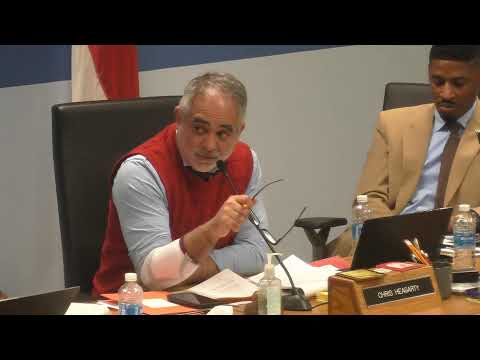
The Wake County Board of Education voted unanimously Nov. 18 to adopt its balanced budget resolution for fiscal year 2025–26, a measure board staff said reconciles the board’s proposed operating budget with the county appropriation and recent state actions.
Chief Financial Officer (presented as "mister Nieder") told the board staff had aligned the board’s May 6 proposed operating budget — which requested a $40.3 million increase from county commissioners — with the county’s final appropriation and the provisions in House Bill 125, a partial state budget bill signed this summer. Nieder said the board had previously waived a provision of board policy 8101 to invest a larger share of fund balance into the coming year and that staff will return with adjustments if the legislature later approves a comprehensive budget.
The resolution, introduced by Vice Chair Swanson and seconded by Miss Edmonds, passed by roll-call vote with all members recorded as “aye.” Swanson thanked staff for managing the district’s roughly $2 billion operating budget and urged constituents to press the General Assembly to complete a full biennial budget. “It’s a choice that they have made not to pass their budget that is impacting not just Wake County, but hundreds of thousands of public school students across the state,” Swanson said.
Board members discussed the practical impacts of state delay on district planning and staffing and emphasized that the budget remains a living document. Nieder told the board that, should the state approve a comprehensive budget, staff would return with recommendations to revise the board’s approved resolution. The board’s action allows the district to operate on an approved set of assumptions while the legislature continues work on the wider state budget.
The board chair called the motion and conducted a roll-call vote in order around the table; the motion carried. Staff described monthly reporting to the board as changes occur.
The resolution was adopted Nov. 18 and will govern district operations for the current fiscal year unless amended following future state action.