
Project SEARCH at Memorial readies interns with disabilities for paid hospital work, teams instructors with SPARK coaches
Get AI-powered insights, summaries, and transcripts
Subscribe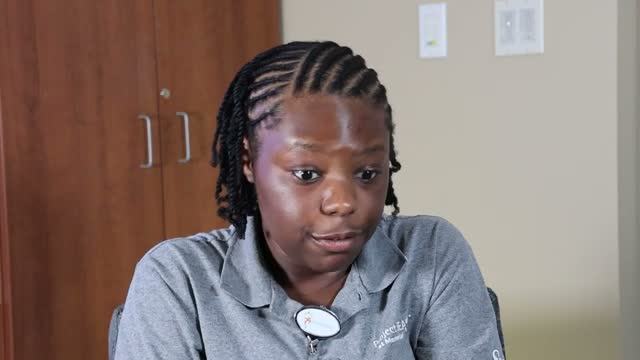
Summary
Participants and program staff described Project SEARCH, a transition program hosted at Memorial that places interns in three 10-week hospital internships, requires 16 hours/week at a prevailing wage, and pairs Memorial instruction with SPARK job coaching and 90 days of post-hire supports.
Speaker 2, an instructor involved with Project SEARCH at Memorial, said the program teaches “soft skills, employment skills, transition skills, independent living skills” and places interns in internships across the hospital to gain hands-on experience.
The program aims to move students with disabilities from high school into competitive jobs. Speaker 1, a Project SEARCH participant, said: “I feel like this was a very crucial thing to be at Project Search because it helps disabled kids ... to get a job and to actually work and to be independent.”
Project SEARCH participants attend a classroom at the Memorial Learning Center when school is in session, then complete three 10-week internships across Memorial’s campus, Speaker 2 said. Interns typically work about 16 hours per week at a prevailing wage in integrated settings with non-disabled peers; the program follows the school calendar and includes school breaks. According to Speaker 2, interns can be hired as early as March, and “the skills trainers will follow them for the next 90 days to make sure that they’re getting supports that they need.” The transcript does not specify the exact prevailing wage amount.
Speaker 3, who spoke about placements within Memorial, said the hospital offers a wide range of roles where interns can learn and sometimes discover new aptitudes: interns “can be placed in many different jobs ... and it’s nice to see them ... uncover that part of themselves.”
SPARK provides job-development and on-the-job coaching, Speaker 5 said: “For SPARK side, we help with the job development, job skills, training them on different tasks and learning, independence on how to do it on their own. ... We work with them on their resumes, getting ready for interviews, and ... getting them started with jobs.” Speaker 2 also said SPARK skills trainers help transition interns from the program into community employment and follow them after hire.
Training in social and communication skills is part of the in-class instruction. Speaker 4 described early lessons teaching interns to read facial cues and body language, and to recognize and respond when someone is upset.
Program staff emphasized outcomes beyond employment: Speaker 2 listed goals that include community integration, access to insurance benefits and retirement plans, and independent work in community settings. Speaker 1 urged peers to take full advantage of the opportunity: “Enjoy yourself being at Project Search. ... Just do your best to be a project ... to make the most of it there.”
There were no formal votes or motions reported in the transcript. The presentation described program operations, timelines, and supports; next procedural steps were not specified in the transcript.