Get Full Government Meeting Transcripts, Videos, & Alerts Forever!
Get email alerts on the District Finance topic
No spam. Unsubscribe anytime.
District presents draft reserve plan and financial outlook; will ask voters about a new capital reserve in 2026
Summary
District financial staff presented a draft reserve plan on Nov. 19 showing the capital reserve will be largely drawn down by planned 2026 projects; staff said they will seek voter authorization in May 2026 for a new capital reserve and highlighted unplanned 2024–25 revenue and savings that improved the district's position.
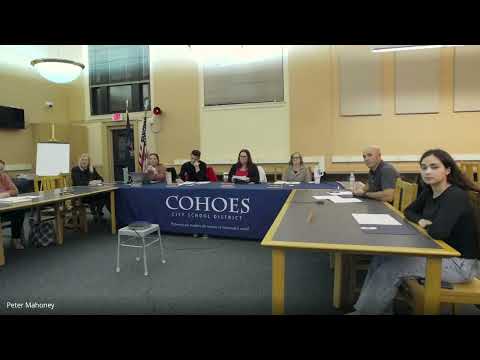
The Cohoes City School District presented a draft reserve plan to the Board of Education on Nov. 19 outlining current reserve balances, prior uses of the voter‑authorized capital reserve and funding priorities for 2026.
Stacy Mackey reviewed legally prescribed reserves (workers' compensation, unemployment, tax certiorari, debt service, retirement contribution and employee‑benefit accrued liability) and said the district is in a stronger position than in prior years. Mackey reminded the board that in 2018 voters authorized a $5,000,000 capital reserve and that successive voter approvals allowed earlier uses (2019 roof/boiler projects and a 2022 authorization allowing up to $2,000,000 for the current $20,000,000 capital project). She said the $20,000,000 project is expected to be substantially complete next month and that upcoming 2026 projects (lighting upgrades to the high school auditorium, athletic equipment storage, courtyard renovation and walk‑in refrigerators) are currently planned and would largely deplete the current capital reserve.
Mackey said the district plans to ask voters in May 2026 to establish a new capital reserve for a specified amount and time period; staff are identifying a target figure informed by an HVAC audit and other facility needs. She also identified the employee benefit accrued liability reserve as a secondary priority to fund retirement incentives and separation costs and said other reserves (workers' compensation, unemployment and retirement contribution) are adequately funded.
On revenue and expense drivers, Mackey noted an unanticipated revenue stream in 2024–25 tied to legalized sports wagering and said savings also arose from unfilled vacancies and delays in out‑of‑district placements. These variances improved the district’s short‑term fund balance, but Mackey cautioned that some savings are contingent and staffing shortages remain a concern.
The draft reserve plan will be included on a future board agenda after staff finalize year‑end financial statements and rounding adjustments; Mackey said the reserve plan will also be posted on the district website for public review prior to a formal board vote.