Get Full Government Meeting Transcripts, Videos, & Alerts Forever!
Get email alerts on the Public Safety topic
No spam. Unsubscribe anytime.
Sheriff warns cuts could cost deputies and slow responses; board discusses drug court funding
Summary
Cowlitz County Sheriff reported cuts at current proposal could eliminate 7–8 deputies and highlighted rising court-security and animal-control costs; commissioners said drug court will be funded for one year from opioid funds while alternatives are explored.
COWLITZ COUNTY — County law enforcement officials and commissioners traded questions Tuesday about how proposed budget reductions would affect staffing and programs, with the sheriff warning that personnel would take the brunt of cuts.
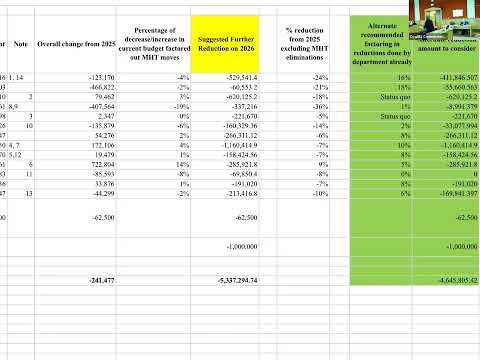
Bridal Thurman (transcript spelling), identified in remarks as the county sheriff, thanked the budget director for early warning on fiscal pressures and said the sheriff’s office is largely fully staffed but could lose several recently hired deputies if cuts stand. Thurman estimated about $1.1 million in reductions could translate into loss of "7 or 8 deputies" and would reduce capacity and increase response times. He also noted court security costs approaching $600,000 annually and an animal-control contract shift that the Humane Society of Southwest Washington proposed to raise fees from about $111,000 to $225,000 next year, an increase he said is beyond the sheriff’s control.
Commissioners asked why the sheriff’s general-fund line appeared to increase in some displays despite an overall reduction percentage; finance explained personnel previously funded by the mental/behavioral health tax were moved to opioid or other restricted funds, so the general fund portion shows adjustments even when total department resources shift between funds.
On treatment-court funding, the board discussed a failed mental/behavioral health tax that had supported drug court positions. Two commissioners voted to continue drug court for one more year using opioid fund dollars while staff pursue alternative funding options, including work with outside providers (Emerald City was cited as a potential partner). Several speakers argued drug court may be more cost-effective than incarceration in some cases; others noted the mental health tax had been rejected by voters largely on tax concerns.
No layoffs or formal reductions were approved at the workshop. Commissioners asked staff to compile options and to provide details for a public hearing next week so officials and departments can review potential staffing impacts and alternatives before any final action.