Get Full Government Meeting Transcripts, Videos, & Alerts Forever!
Get email alerts on the Adult Education topic
No spam. Unsubscribe anytime.
Midcoast Adult Education outlines services, facility move and outreach for RSU 40 region
Summary
At an RSU 40 meeting, Takiyah Cox presented on Midcoast Adult and Community Education (hub 7), detailing federal/state program goals, local services, participation figures, a move to Union School facilities, and plans to expand academic offerings and outreach.
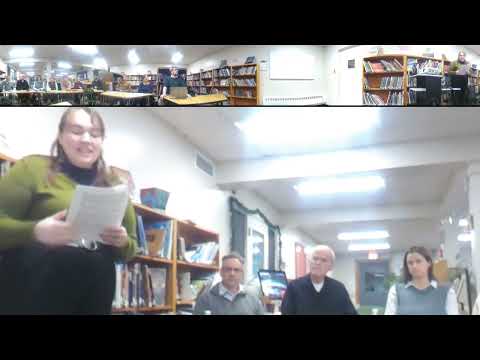
Takiyah Cox, director of Midcoast Adult and Community Education, told RSU 40 board members that the program aims to help adults build literacy and job skills, support parents, and prepare learners for postsecondary education and careers under the federal Adult Education and Family Literacy Act (Title II of the Workforce Innovation and Opportunity Act).
Cox said Midcoast is one of Maine’s nine adult-education hubs (hub 7) and described its role in the WIOA one-stop system, including referrals to Title I and other workforce partners. "If a student comes through our doors, we'll refer them to the other programs," Cox said. She named partnerships with Google Workforce Solutions for transportation and technology assistance.
The program serves RSU 40 and RSU 12 under an interlocal agreement, covering 12 towns across four counties and about 436 square miles, Cox said. She described barriers many learners face, notably transportation, and noted the program offers remote learning and community-enrichment classes in Whitefield, Waldoborough and Warren.
Cox listed staffing and service models: a program assistant (Alex Kelly), HiSET co-teachers (Tom Rubin and Kathy Jack) supporting a drop-in HiSET lab, and remote support (Deb Carter). She described four program areas: core academics, adult basic education with an upcoming digital literacy course, HiSET/high school equivalency support, and college-and-career access. Workforce certificates offered locally include OSHA-10 and a BHP course and a registered Maine guide preparation program.
On program scale, Cox said 16 learners are enrolled in academic programs, most entering at an education functioning level equivalent to grades 3–5, and that 104 members of the public are enrolled in community-enrichment classes. She said at least 93 learners previously started services but did not complete them and that program outreach (including a new catalog mailed with postcards) aims to re-engage those participants.
Cox also described professional-development work with the Maine Department of Education Office of Adult Education and hub 7 committees to mentor mostly new staff. She told the board the program recently moved into Union School, providing a larger, cleaner space and a dedicated entrance to reduce stigma for students who previously shared space with other school functions.
Cox said the statewide association had recently replaced full local websites with directory pages, which caused the program to lose its site; the program now operates a locally owned website and will publish an expanded catalog. "We will be having our new catalog. It's going to be on magazine paper, with a lot more information in it," she said.
Board members and community attendees praised the catalog and the new location. One commenter credited Karen Fike with identifying the new space, and board members described logistical steps taken to increase privacy and program visibility.
Cox closed by inviting board members to follow up after the meeting for additional questions about adult learning or the program. The presentation did not include formal board votes or policy decisions; next steps mentioned were outreach via the catalog and continued curriculum review to better align instruction with lower-level learner needs.