
RSU 40 details EEI Phase 3, arsenic treatment and prioritized ADA fixes as bond planning continues
Get AI-powered insights, summaries, and transcripts
Subscribe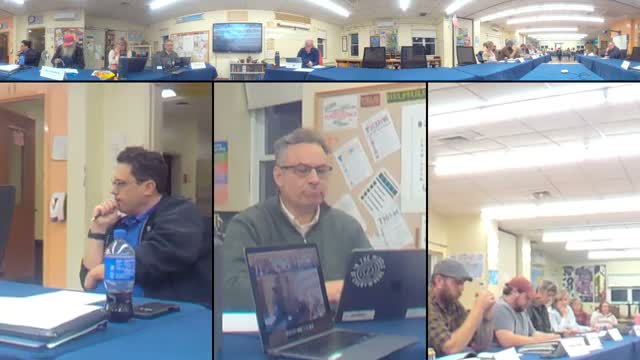
Summary
The RSU 40 board outlined EEI Phase 3 work including a biomass boiler, arsenic water treatment and increased storage, and debated bond priorities such as ADA compliance, asbestos remediation, bathroom upgrades and science labs; the district also applied for a state revolving renovation loan.
RSU 40 board members on the meeting reported progress on a proposed EEI Phase 3 project and laid out priorities for a forthcoming school bond, emphasizing health and accessibility upgrades over aesthetic work.
Facility staff said EEI Phase 3 would bring a biomass boiler to free up space in the boiler room and enable a larger water‑treatment system at the high school, specifically an arsenic removal system. The presenter said the district’s three‑month average arsenic reading is about 0.98–0.99 and that the upgrade is intended to keep the district safely below the state threshold. The district also plans to increase on‑site water storage from roughly 500 gallons to at least 1,000 gallons, with potential for a larger tank depending on final scope.
The board discussed balancing the EEI scope against what will go forward on the bond. Staff told members they are coordinating schematics with the state and expect to break ground in spring and have Phase 3 operational by next fall if schedules hold. The district has been holding weekly planning meetings with EEI and architects and will hold a facilities review on Dec. 18 and follow-up presentations in January to present hard cost estimates.
District staff also said the administration submitted five projects to the State Department of Education revolving renovation loan program (applications cover up to $2 million per project, $4 million per school): three projects at the high school and one each at Union and Friendship. Officials said loan results will not be known until close to year‑end, creating information gaps for the bond decision.
Board members identified immediate priorities should bond capacity be constrained: asbestos remediation, ADA compliance (including main office access and counseling office access for students in wheelchairs), bathroom plumbing and conversions to single‑use stalls, and science lab upgrades. One member described single‑use stalls and external sinks as a proven design to reduce misconduct in bathrooms; another raised the need to sequence work and present voters with “needs, not wants.”
The board also discussed emergency power options: a previously purchased 40‑kilowatt generator is being considered for Prescott Memorial School; officials warned that switching hardware and electrical-panel work can be costly and complicated and said installation may be deferred until spring to avoid winter weather complications.
Next steps: staff will return with detailed scope and cost estimates at upcoming committee and full‑board meetings; the outcome of the State Department of Education renovation loan application will factor into final bond decisions.