Get Full Government Meeting Transcripts, Videos, & Alerts Forever!
Get email alerts on the Right Of Way Abandonment topic
No spam. Unsubscribe anytime.
Danville commission approves first reading to abandon Old Lexington Road right-of-way amid heated neighborhood concerns
Summary
On Nov. 24 the City of Danville approved a first reading to abandon approximately 1.9 acres of the Old Lexington Road right-of-way. City staff said the move can reduce maintenance costs and give the city leverage to seek design conditions; residents warned it could facilitate a zone change that would bring commercial traffic and safety risks to Old Lexington Road.
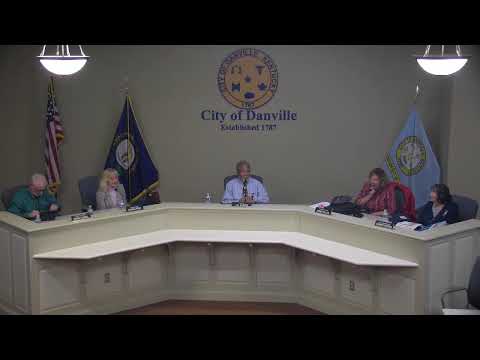
The City of Danville on Nov. 24 held a lengthy debate and public comment period before approving the first reading of Ordinance 20-60 to abandon portions of the Old Lexington Road right-of-way.
City staff and the city manager framed the measure as a maintenance and planning tool: the city currently mows and maintains the old roadbed, and abandoning the right-of-way would remove that recurring expense while allowing the city to work with adjoining owners to shape future development. "We think by closing the right-of-way you create leverage to secure enhanced building and landscaping standards," the city manager said during the staff presentation.
Residents who live along Old Lexington Road urged the commission to delay or reject the action. Bob Webster, a resident, said the swap being discussed could let commercial uses move closer to established homes: "We don't need an abandonment of property for the city commission to have leverage there," Webster said, arguing the commission already has tools to influence development. Several residents, including Tom Quilligan and David Shannon, said recent surveying activity and the timing of the proposal made it appear the decision was coordinated with developers. "It seems awfully coincidental that less than 48 hours after the last meeting there were 12 surveyors carving up the property," Quilligan said.
Residents also raised safety concerns tied to traffic patterns on Old Lexington Road. David Shannon and others warned that additional traffic, including heavy vehicles, would worsen an intersection already used as a cut-through from the bypass. "That intersection with three or four roads coming in together is a disaster waiting to happen," Shannon said.
City legal staff and the city attorney repeatedly emphasized the legal and procedural limits of the vote. They told residents that a first reading does not change zoning and that any map amendment or zone-change application must be heard by the planning commission at its public hearing calendar. The planning commission is scheduled to hold a public hearing on related zone-change applications submitted by Cornerstone Assembly of God and Newcomb Oil Company on Dec. 10 (staff identified 9 a.m. as the planning commission's likely hearing time). "The question before you tonight is whether to continue maintenance and ownership of this old roadbed," the city attorney said. "A zone change is a separate process handled by the planning commission."
Procedurally, the mayor moved and the commission voted to move item 10 later in the agenda so that the second public comment period could occur before the first-reading vote. After listening to the additional speakers the commission approved the ordinance's first reading on a roll-call vote; commissioners recorded unanimous support for the first reading. Staff told the public a second reading will be scheduled at a future meeting before any abandonment becomes final.
Next steps: A planning commission public hearing on Dec. 10 will consider any zone-change applications related to adjacent property use. The first-reading approval by the city commission only advances the abandonment process and does not itself change zoning or land use.