
Senators, principals clash over finance of choice towns, tuition and supervisory-union size
Get AI-powered insights, summaries, and transcripts
Subscribe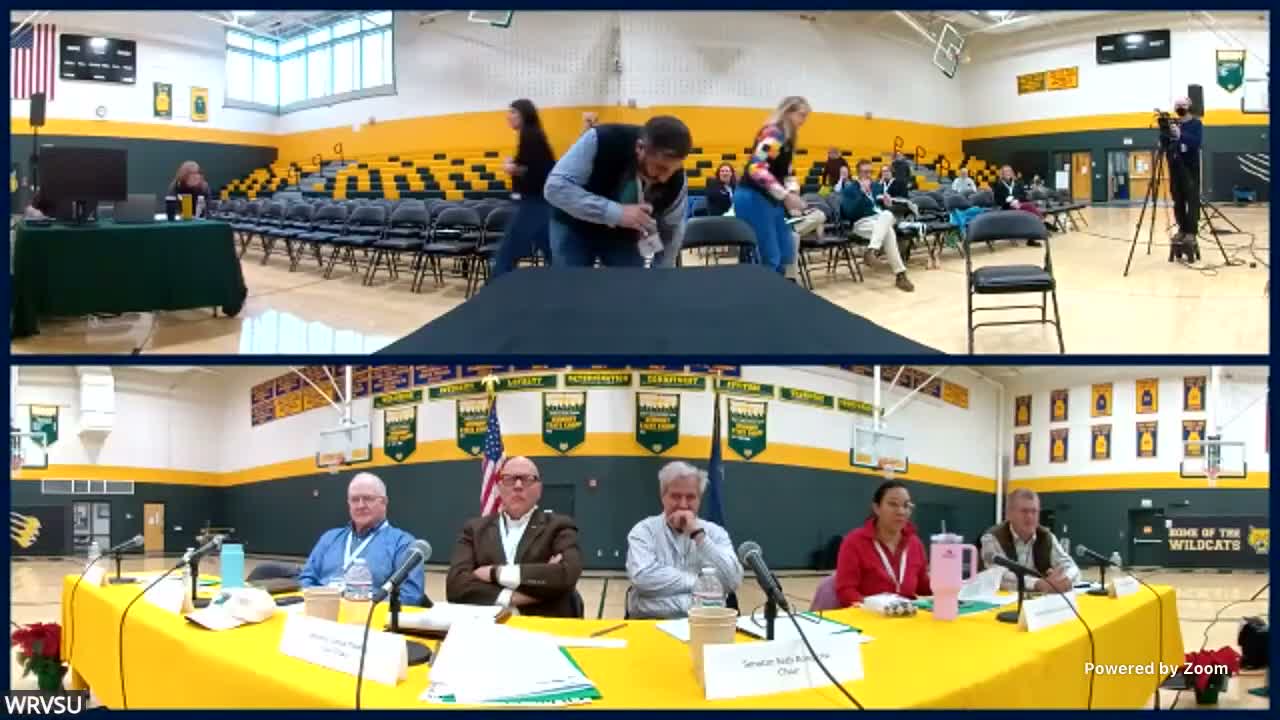
Summary
Committee questioning focused on whether 'choice' towns avoid facility costs for regional high schools, how tuition ($19,900) and tuition-headcount (83 students reported) feed district budgets, and whether supervisory-union consolidation or a revised foundation formula should be pursued.
A central theme in the White River Valley field hearing was finance: senators and local education leaders debated how tuition, bonding and the state's funding structure affect rural districts. An unidentified senator asked why choice communities do not participate in bonding for regional high-school facilities; the senator said the arrangement appeared "patently unfair" to towns that must bond for the same facilities.
District leaders and principals defended their finances and described how tuition revenue and reserves are used. An official representing White River Unified District said the district sets an announced tuition (stated in testimony as $19,900) and reported 83 tuition students, and that those funds help support both programming and facilities. The official added that the board had approved a $2,300,000 project funded from capital reserves and donations, and that about $750,000 in private donations would cover part of a performing-arts renovation.
Several senators pushed for better accountability and more research before wholesale structural changes. A district leader cautioned that a foundation-formula overhaul would require careful rate-setting and warned of perverse effects from penalisms or ill-tested measures. "We need to do some really good research on [rates]," the official said, adding that unilateral 'right-sizing' without fair representation risks losing local trust.
Other concerns included course access and equity: one senator cautioned that losing AP courses on campus in favor of dual enrollment could harm equity. District leaders said they continue to offer AP options where feasible and that dual-enrollment opportunities (including partnerships with Dartmouth) should supplement, not replace, campus offerings.
What happened next: The committee did not vote on any legislative proposal and took no formal actions; members said the hearing materials and testimony would guide further study of supervisory-union governance and state funding.