Get Full Government Meeting Transcripts, Videos, & Alerts Forever!
Get email alerts on the School Board Boundary Changes topic
No spam. Unsubscribe anytime.
Board reviews proposed elementary boundary redesign that would affect about 509 students; vote set for Dec. 17
Summary
Superintendent and staff presented a proposed elementary boundary redesign intended as a 10‑year 'legacy' plan to rebalance enrollment and program access; staff said the proposal would affect roughly 509 PK–5 students (about 12% of the cohort) and recommended program/model changes at Lincoln and Talahi and moving Spanish immersion from Westwood to Kennedy.
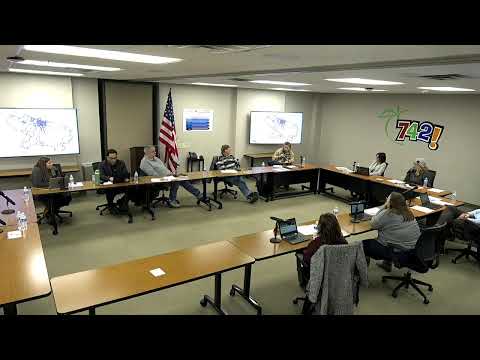
Superintendent Lori Putnam and Assistant Superintendent Nikki Hanson presented a proposed elementary boundary redesign for ISD 742 intended to serve as a 10‑year plan to stabilize enrollment, preserve community schools and make room for projected development.
Hanson explained the district has not extensively reviewed boundaries since the 1990s. Using a district mapping tool and an MDE interactive map, staff identified concentration of PK–5 students in central St. Cloud and underutilized capacity in some outer areas. The proposal would reassign students across sites and adjust program models so neighborhood schools can serve children from preschool through fifth grade in community sites.
Key changes summarized by Hanson include: - Relocating the North‑side Spanish immersion program from Westwood to Kennedy to create a K–8 pathway and allow growth to eighth grade. - Converting Lincoln and Talahi into PK–5 community schools (undoing a previous developmental split) to reduce transitions and improve sibling alignment. - Shifting several smaller neighborhood areas among Kennedy, Westwood, Discovery, Madison, Oak Hill, Lincoln, Talahi and Clearview to rebalance facility utilization.
Hanson provided a table of impacts that totaled 509 students affected (examples included a 208‑student shift east of Highway 15, an 83‑student zone change east of 3rd Street, and other smaller areas). She said the changes represent roughly a 12 percent change for the elementary population for the proposed year (2026–27) and that current in‑district transfers will be honored while new transfer requests will be paused until summer 2026.
Board members asked whether recent enrollment increases represented returns from open enrollment or new in‑district transfers and how sustained capture‑rate changes would affect long‑range projections. Hanson said the projections use current capture rates and filed development data but acknowledged uncertainty about future open‑enrollment trends. Staff committed to producing transportation route mockups and to hosting school tours and community communications if the board approves the redesign.
The board did not vote on the redesign at this meeting; staff said the proposal will return for a final board vote on Dec. 17.