Get Full Government Meeting Transcripts, Videos, & Alerts Forever!
Get email alerts on the WUI Code Map topic
No spam. Unsubscribe anytime.
Planning commission recommends state-mandated WUI code and map after public concerns about cost and wildlife
Summary
Santaquin’s planning commission unanimously recommended that the city council adopt a Wildland-Urban Interface (WUI) code and associated map required by House Bill 48, while public speakers raised concerns about development impacts, wildlife and increased building costs.
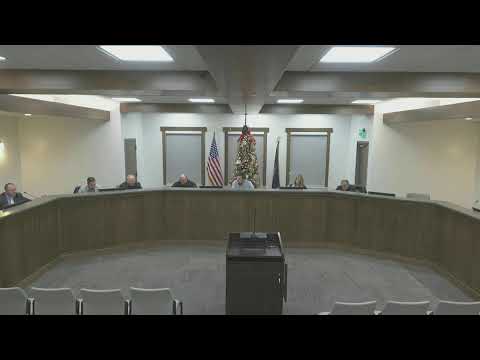
The Santaquin City Planning Commission voted unanimously Dec. 9 to recommend that the City Council adopt a Wildland-Urban Interface (WUI) code and map required under House Bill 48. Commissioners voted separately to forward the WUI code and then the WUI map; both recommendations were unanimous.
City staff and fire leadership recommended adopting the 2006 WUI code for now, saying the older code is established at the state level and that adopting the newer 2021 or 2024 versions could leave the city in regulatory limbo. Staff said the city must adopt both a code and a map by Jan. 1, 2026. "If we do not adopt the code and we do not have a map, if we have a significant wildland fire that comes through, the city then eats the cost, multiple millions of dollars," a fire official told the commission.
The code focuses on fire mitigation measures for new construction in mapped WUI areas — for example, requirements for exterior materials and one-hour-rated construction details to reduce the spread of ground-to-structure fire — and does not directly address wildlife protections, staff said. Several residents asked whether the city or developers will be required to pay additional fees for mitigation or to fund wildlife measures. Staff and the fire marshal clarified that HB 48 gives the state the authority to set WUI fees; the county will collect those fees, and homeowners may reduce fees later through property-level mitigation if the state provides mechanisms for that.
Public commenters raised broader concerns that the code and continuing development will reduce rural character, increase traffic and imperil wildlife. "We're taking land from the animals...This probably should have happened 20 years ago," resident Brandon Vaughn said, acknowledging both the need for mitigation and concerns about cumulative growth.
Commissioner Nixon moved to recommend the drafted WUI ordinance to the City Council; Commissioner Romero seconded. The motion passed unanimously. A second motion to recommend the WUI map likewise passed unanimously. Staff said the city and the fire department have advocated for adjustments at the state level and expect further refinements in future legislative sessions, but emphasized the financial and operational risk to the city if it fails to adopt the code by the state deadline.
Next steps: The Planning Commission's two positive recommendations will be forwarded to the City Council for final action; the state timeline indicates a required local adoption date of Jan. 1, 2026.