Lifetime Citizen Portal Access — AI Briefings, Alerts & Unlimited Follows
Exelon utilities outline phased DERMS, push Green Button-style data platform and 2028 PJM alignment
Loading...
Summary
Exelon Utilities told the Maryland PSC it plans phased DERMS and a DER gateway to support virtual power plants, recommended a Green Button Connect My Data-style platform for customer data sharing and a DER registry path, and estimated phased timelines that target core utility capabilities by 2027–2028.
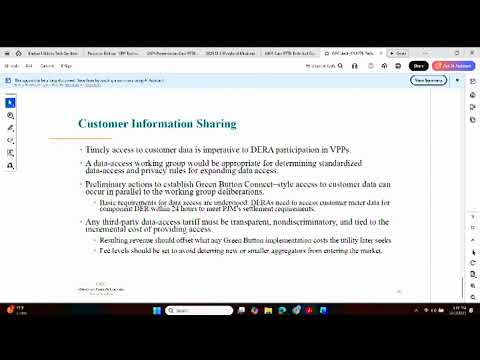
Exelon Utilities representatives presented a multi-year plan to enable virtual power plants and distributed energy resource (DER) aggregation, saying foundational IT and clear data flows are prerequisites to compensating customers for DER services. "Green Button Connect My Data is essentially a secure mechanism to transfer customer data from utilities to customers and third parties," said Lindsay North, director of clean energy strategy for PHI, summarizing Exelon’s customer-data recommendation.
The utilities framed the work as two linked tracks: (1) customer-facing program approvals that establish compensation for DERs and (2) the information‑technology investments — DER gateways, utility DERMS, network security and communications protocols — needed to operate them. Exelon emphasized a phased, "least‑regrets" approach: use pilots and targeted rollouts now while designing architectures that can scale to meet FERC Order 2222 and PJM's planned 2028 timelines.
Why this matters: Maryland law and recent PSC orders have pushed state utilities to prepare for aggregated DER participation in wholesale markets and to support DRIVE Act objectives. Exelon told the commission that standardized data access, secure communications, and a DER gateway are necessary to avoid technology fragmentation that could block aggregators or inflate costs.
What Exelon proposed: the utilities described three near-term recommendations. First, form a workgroup or subteam to design a Green Button Connect-style platform for customer authorization and third‑party access; second, use device‑level metering through pilots and a subteam to develop cross‑use‑case standards; third, adopt IEEE 2030.5 where appropriate while retaining DNP3 or private protocols for higher‑capacity or low‑latency needs. PHI and BGE also outlined DERMS roadmaps: PHI targeted a utility-derms capability for Q1 2027 and a DER gateway plus full third‑party integrations by 2028, while BGE described multi‑phase DERMS deployments that already produced early operational benefits.
Questions from commissioners focused on timing, costs and system planning. Commissioner Schleisman asked why BGE started DERMS earlier than PHI; Exelon said the utilities took different corporate strategic paths but are coordinating on requirements. Cost estimates discussed during Q&A included a roughly $12.35 million enterprise estimate for PHI's DERMS (the Maryland share about $4 million) and larger multi‑company investments for BGE; Exelon representatives said more detailed cost‑benefit quantification would follow in implementation filings.
The utilities asked the commission for clear direction on timeline expectations and cost‑recovery treatment, and recommended a data‑access tariff that could charge approved third parties fees to offset implementation costs. The panel emphasized that pilots, iterative development, and stakeholder coordination will be required to hit PJM’s 2028 go‑live for FERC 2222 participation.
What happens next: Commissioners encouraged an expedited working group to develop practical specifications for a Green Button-style platform, clarified expectations on DER registry alignment with PJM, and sought more granular benefit quantification before any long‑term cost recovery is approved. The utilities reiterated they are not requesting immediate direction but expect the PSC to issue subsequent orders that will guide implementation and recovery.