Get Full Government Meeting Transcripts, Videos, & Alerts Forever!
Get email alerts on the Behavioral Health Crisis System topic
No spam. Unsubscribe anytime.
Douglas County commissioners approve crisis response coalition charter to coordinate behavioral health response
Summary
The Douglas County Board of Commissioners approved a charter creating the Douglas County Crisis Response Coalition, an advisory body intended to coordinate the county's crisis system — including the TRC, mobile response teams and 988/local crisis line — and to forward recommendations to elected bodies and state partners.
The Douglas County Board of Commissioners voted to approve the charter creating the Douglas County Crisis Response Coalition, a multi-agency advisory group meant to oversee and improve the county’s behavioral-health crisis system. The commission approved the charter by voice vote, recorded as 4–0, with Commissioner Reed absent.
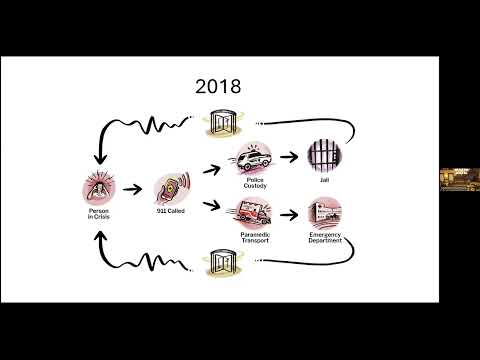
Bob Transky, director of behavioral health projects, told commissioners the charter formalizes a coalition that has been shaped over several years of work and technical assistance, including guidance from Dr. Ken Minkoff and a GPL process tied to the Harvard Kennedy School. “The goal of a crisis system is not to eliminate police intervention,” Transky said. “The goal is to work hand in hand with police so that person gets to the right place, so they can get the right care in the right setting every time.”
Presenters described the coalition’s intended structure: an executive committee, a crisis system operations team (CSOT) focused on communications and quality improvement, and an expanded community advisory group derived from the Treatment and Recovery Center (TRC) advisory board. Sonia Beza, deputy director of the Emergency Communications Center, said smaller work groups will address niche problems such as alternative 911 emergency response and transportation logistics. “We’ve identified three things we want to focus on this year,” Beza said, including whether Douglas County should retain a local crisis line as 988 evolves.
Commissioners pressed presenters on the group’s authority. Transky was explicit that the coalition is advisory: it can develop and send consensus-based recommendations to governing bodies — the county commission, city commissions, the Kansas Department for Aging and Disability Services (KDADS) or Osawatomie State Hospital — but it does not itself have power to change statutes or binding policies. “What they have the ability to do is to advance a recommendation to the county,” Transky said.
The presenters also cited several measures they said suggest progress: decreases in emergency-department behavioral-health visits (presenters characterized the change as roughly a 27% shift) and a reported drop of more than 65% in monthly referrals from Douglas County to Osawatomie State Hospital since the TRC opened. Staff described tools that support coordination, including an internal care-coordination platform (myRC) that generates a nightly “familiar faces” list to help partners identify high-use individuals and coordinate follow-up.
Commissioners asked for follow-up documentation, including minutes and clearer short-term milestones. Several commissioners suggested the charter include defined metrics and ownership of tasks for the first 30–90 days; presenters said the county’s Community Health Improvement Plan contains strategic targets and that some milestones will be set and iterated through the coalition’s work.
The commission approved the charter after discussion. The coalition’s next steps include continuing CSOT and work-group meetings, collecting and sharing data on 988/local crisis line volumes and repeat utilizers, and returning substantive recommendations to the commission or to partner agencies when appropriate.