Get Full Government Meeting Transcripts, Videos, & Alerts Forever!
Get email alerts on the Personnel No Confidence topic
No spam. Unsubscribe anytime.
Teachers, union and community press Bedford City board after BEA’s no-confidence vote in superintendent
Summary
At the Nov. 20 board meeting, the Bedford Education Association announced a unanimous executive-board vote of no confidence in the superintendent, prompting multiple public speakers to call for change; the board limited public discussion as personnel matters and entered executive session on the issue.
Bedford City — At the Nov. 20, 2025 Bedford City School District board meeting, members of the Bedford Education Association and community speakers publicly announced a vote of no confidence in the district superintendent and urged the board to act.
Trish Duncan, speaking for the BEA executive board, told the board the organization voted unanimously on Nov. 17 to issue a vote of no confidence in the superintendent’s leadership, citing “an overall lack of trust” and specific concerns including fiscal management and a failure to collaborate: “This vote is not intended as a lack of confidence in our students, our teachers, our district staff, or our entire community… Specifically, you have failed time and again to deliver our district what our district needs to best serve our students and staff,” she said. The board interrupted the remarks, saying the subject was personnel and not appropriate for public discussion.
Several teachers and community members followed with similar remarks. A teacher with 26 years’ experience said staff had “no confidence in the ability to communicate with district constituents” and criticized what the speaker described as punitive disciplinary practices and a lack of supportive leadership. Regina Glover, a substitute teacher and community member, urged the board to improve HR processes, saying staff members had been treated without dignity during administrative leaves.
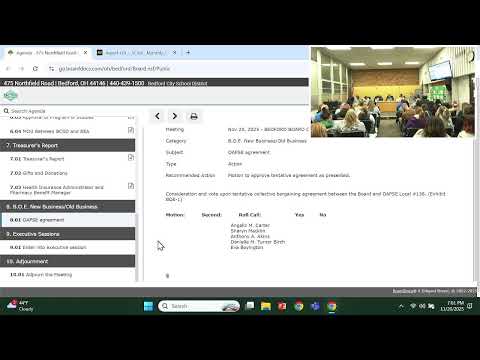
Board chair and other members repeatedly cautioned that personnel matters could not be debated in open session. After public comment and additional discussion at the end of the agenda, the board voted to enter an executive session “to discuss the appointment and employment [or] dismissal, discipline, promotion or compensation of a public employee,” a vote that passed by roll call. The board announced there would be no votes after the executive session.
The meeting record shows speakers raising requests for resignations and disciplinary data; those requests were not resolved in open session and were deferred to the executive session. No formal action or personnel decision was announced before the meeting adjourned into closed session.