Get Full Government Meeting Transcripts, Videos, & Alerts Forever!
Get email alerts on the Finance Policy Fund Balance topic
No spam. Unsubscribe anytime.
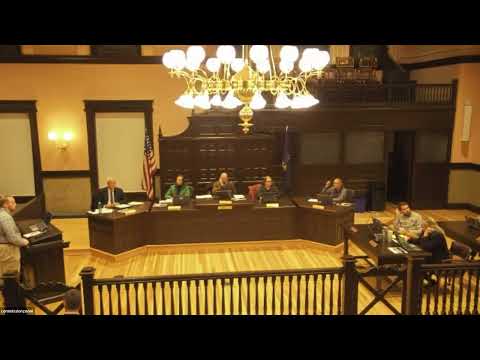
Douglas County commissioners debate new fund-balance policy, stop short of final adoption
Summary
After a staff presentation recommending minimum fund-balance targets tied to GFOA guidance, commissioners and residents sparred over reserve size and timing. The board discussed deferral and adoption but did not finalize long-term changes at the Dec. 3 meeting.
Douglas County commissioners heard a detailed staff presentation Dec. 3 proposing revisions to section 3.4 of the county finance policy that would classify funds by restriction and set minimum fund-balance targets for key operating funds.
Finance staff, led by Brooke Sauer, told commissioners the draft policy uses Government Finance Officers Association (GFOA) terminology (restricted, committed, assigned, unassigned) and recommends minimum fund-balance targets generally in the 20–25% range of operating expenditures, with some exceptions noted for employee-benefit reserves. Staff said the policy would require monthly monitoring and annual review and that the classifications were informed by benchmarking with peer counties.
The recommendation prompted sustained questioning from commissioners about specific fund classifications and flexibility. Commissioner concerns included whether road-and-bridge and motor-vehicle funds should be categorized as committed rather than unassigned, how the county would handle shortfalls or overages (staff described options including year-end transfers or budget-time adjustments), and whether the policy should include explicit maximum reserve levels. Staff warned that one fund (employee benefits) may be out of compliance with the proposed targets in 2026 and emphasized that the policy is intended to guide—not mechanically constrain—commission decisions.
Several residents spoke during public comment, urging the board either to reject the draft or add explicit limits on maximum reserves and clearer language about returning excess funds to taxpayers. John Eames and others said adopting a broad “greater than or equal to” standard without an upper bound would leave too much discretion in staff hands and urged a clearer mechanism for when reserves exceed policy targets.
Commissioners were split on the next step. Some argued adopting the minimums before budget deliberations would give staff and the commission clearer guidance; others urged postponing final action until year-end balances are closed and the larger, consolidated finance policy can be considered. Several procedural motions were made during debate; the panel continued discussion and did not adopt a final, uncontested long-term revision at the meeting. Staff said they will continue work on the full finance policy and will return with additional materials, including end-of-year balances.
The presentation and debate were recorded; staff provided preliminary figures indicating that funds covered by the draft policy total approximately $30.6 million, with early estimates showing the general fund at roughly 23% of operating expenditures and road-and-bridge near 25%. Commissioners directed staff to continue engagement and said they expect further discussion before the 2027 budget cycle.