Get Full Government Meeting Transcripts, Videos, & Alerts Forever!
Get email alerts on the Capital Improvement Program topic
No spam. Unsubscribe anytime.
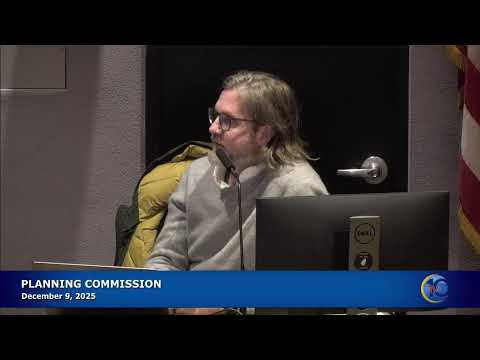
Planning commission unanimously backs FY 2027 CIP, adds affordable-housing process, quick-build and solar planning
Summary
Charlottesville’s Planning Commission voted unanimously to recommend the draft FY 2027 Capital Improvement Program to the city manager and council with four amendments: a transparent process for allocating incoming in‑lieu affordable-housing funds and additional out‑year allocations, staff capacity commitments, fully funding quick-build projects to the extent of city capacity, and planning/allocating funds to secure IRA solar tax-credit “safe harbor.”
Charlottesville’s Planning Commission on Tuesday recommended the city’s proposed five‑year Capital Improvement Program for fiscal year 2027 to the city manager and city council, approving the motion with a set of amendments intended to improve transparency, preserve near‑term project opportunities and capture federal solar incentives.
Miss Hamill, the city’s capital planning lead, presented the draft plan and told commissioners the CIP balances annually through a mix of bond issuance, general fund transfers and contingency resources: “this plan looks to fund the CIP with roughly a 153,000,000 of bonds” and just over $44,000,000 in general fund transfers, she said during the staff presentation. The draft prioritizes education, transportation and affordable housing as the top categories in the five‑year program.
Commissioners pressed staff on several recurring themes: how to make bike and pedestrian investments more visible in the CIP; whether the $100,000 annual bike‑line item plus existing programmed funds is sufficient to carry planning and quick‑build work into FY27; the status and cash‑flow timing for school and affordable‑housing projects such as Walker Pre‑K and the Carlton Mobile Home Park; and how incoming in‑lieu payments from development should be allocated.
To address those concerns, commissioners negotiated and approved four principal amendments before calling the roll. The amendments, summarized by commissioners at the meeting, require the city to:
- Create a transparent, competitive process and plan for allocating incoming in‑lieu affordable‑housing payments and to increase planned affordable‑housing expenditures in FY29–FY31 (and for incoming in‑lieu payments), with explicit attention to staffing and expertise capacity to administer those programs;
- Fully fund neighborhood “quick‑builds” to the extent of the city’s operational capacity in the next fiscal year and ensure funding commitments are adequate to address time‑sensitive bicycle projects that may arise before the comprehensive transportation plan is complete;
- Create a plan and allocate any funds required, including in the current fiscal year, to obtain safe‑harbor status for contemplated municipal solar projects so the city can access IRA investment tax credits;
- Retain more specific tracking of projects in the parks and school categories so that future CIP cycles better connect strategic planning goals to cash commitments.
Commissioner (speaker 8) moved the recommendation and the commission recorded a unanimous approval. Roll call recorded ayes from Commissioners Stoli Yates, Duranzio, Stoltenberg, Yoder, Roker, Mitchell and Chairman Schwartz.
The approved amendments aim to balance the staff’s preference to avoid speculative, aspirational budgeting with commissioners’ requests for clearer, more programmatic use of large one‑time receipts and greater readiness to seize time‑limited project opportunities. Miss Hamill said the City Manager will continue to review yellow‑flagged line items (projects still under departmental review) and staff will fold the commission’s direction into the recommendation memo to council, which will receive the CIP as part of the overall budget process in March.
The commission’s action does not itself authorize spending; it is a recommendation that will accompany the manager’s budget and then be considered by City Council. Staff noted several specifics for council and the public: the CIP includes a new McGuffey roof replacement project and increased HVAC funding, the Oak Lawn/Walker conversation may shift project timing but not necessarily order, Dominion pole remediation and bus replacement costs were updated, and existing programmed bike funds of roughly $800,000 this fiscal year will be spent on named projects (5th Street bikeway, Rose Hill re‑striping), leaving an estimated $200,000 carryover alongside the proposed $100,000 annual allocation.
Next steps: staff will prepare the written recommendation packet to accompany the city manager’s proposed budget in March, incorporate the commission’s amendments and outline any staffing or process changes to implement the competitive allocation for affordable‑housing funds. The commission’s recommendation will be one input into the council’s final budgeting and appropriation decisions.
Votes at a glance
- Motion: “Move to recommend approval of the FY ’27 Capital Improvement Program with the following amendments.” Mover: speaker 8 (as recorded in the meeting transcript); Second: recorded. Outcome: approved (7–0). Roll call recorded ayes from Commissioners Stoli Yates, Duranzio, Stoltenberg, Yoder, Roker, Mitchell and Chairman Schwartz.
— Reporting note: this article relies on staff presentation numbers and direct quotes recorded in the Planning Commission public hearing. Items marked in the CIP packet as “yellow” were described by staff as still under departmental review and may change before the manager’s proposed budget is transmitted to council.