
House Natural Resources subcommittee examines claims that EJA is being used as litigation funding for environmental groups
Get AI-powered insights, summaries, and transcripts
Subscribe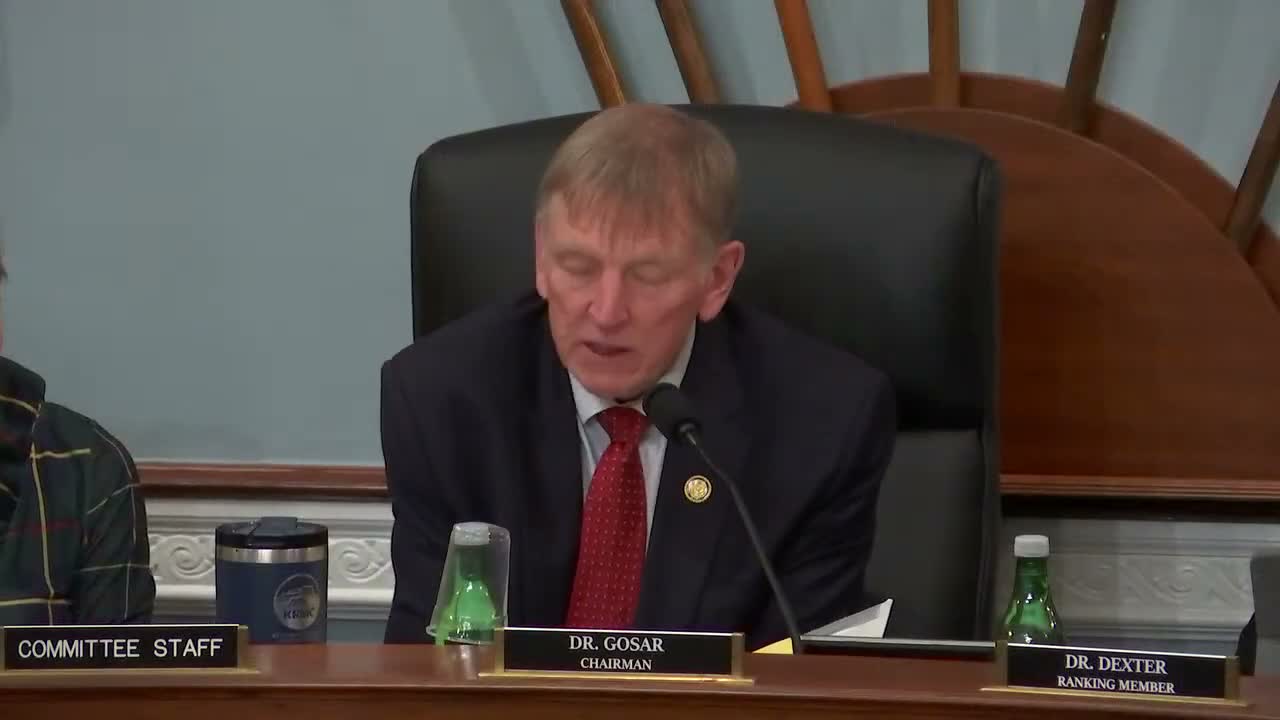
Summary
Republican members and witnesses told a House Natural Resources subcommittee that the Equal Access to Justice Act has been exploited by well-funded environmental nonprofits to recover large attorney-fee awards and delay agency projects; Democrats and law professors countered that EJA remains essential for low-resourced plaintiffs and that safeguards limit frivolous claims.
WASHINGTON — Republican members of the House Natural Resources subcommittee opened a Dec. 9 hearing by saying the Equal Access to Justice Act (EJA) has been used by some environmental nonprofits to recoup large attorney-fee awards and to pursue what they described as repeated procedural litigation that delays agency projects.
“We're here to talk about the abuses of the Equal Access to Justice Act by the environmental NGOs,” Chair Gosar said at the start of the hearing, citing federal agency payments he said totaled about $24,800,000 from fiscal 2019 through 2024 and saying roughly 76% of those awards went to environmental nonprofits.
The hearing brought together witnesses who detailed how they say EJA is applied in practice and offered reforms. Regina Lennox, senior litigation counsel for Safari Club International, said large nonprofits exploit a 501(c)(3) exemption to the statute’s financial limits, receiving fee awards for routine or procedural wins. Lennox recommended requiring the same net-worth cap for 501(c)(3) organizations as for other entities, limiting the number or amount of awards per organization, barring awards for purely procedural relief, rescinding exceptions to the statutory hourly cap, and requiring courts to report EJA awards directly.
“A government should not subsidize wealthy special-interest groups to sue itself,” Lennox said in her five-minute statement.
Todd Wilkinson, a South Dakota rancher, described repeated litigation that he said ties up land-management decisions and harms grazing operations and local economies. “When they're tangled up in court over procedural issues, they're effectively forced off the very ground that they need in order to exist,” Wilkinson said.
Travis Joseph, president and CEO of the American Forest Resource Council, gave a detailed case example from the Ochoco National Forest. He described a safety-focused, 80-acre tree-removal project at Walton Lake that was blocked by litigation, which Joseph said produced a roughly $200,000 EJA award that exceeded the cost of the ground contract and delayed implementation for about a decade.
“Hundreds of thousands of dollars” can be spent on litigation and additional environmental analysis, Joseph said, without what he called a commensurate improvement in conservation outcomes.
Republican members pressed witnesses on mechanisms they said encourage settlement and repeated filings, including a complaint that courts regularly grant higher hourly rates under the statute's “special factor” exception and that the federal government sometimes settles rather than contesting fee claims because of the risk of paying additional fees.
Democratic members and legal scholars pushed back. Ranking Member Dexter said EJA “promotes fairness in the court system by helping a single person or small group of people take on the federal government,” and noted that most EJA awards historically go to veterans and Social Security claimants. “Cases that receive an EJA award are by definition not frivolous,” she said, urging the committee to protect access for vulnerable litigants while pursuing any transparency improvements.
Professor Daniel Rolfe of Lewis & Clark Law School told members that two key safeguards limit abusive awards: a prevailing-party requirement and judicial review of whether an agency’s position was ‘‘substantially justified.’’ Rolfe warned that some proposed reforms, if too broad, could prevent well-resourced parties from enforcing laws that protect nationally significant resources.
Witnesses and members repeatedly debated what reforms would achieve the committee’s aims without restricting access. Suggestions advanced by Republican members and witnesses included: applying the EJA net-worth cap to 501(c)(3) entities; capping or standardizing allowable hourly rates (the statute currently references a $125-per-hour baseline with court-approved increases for special factors); eliminating the “fees on fees” practice that awards litigation costs for litigating fee claims; and requiring clearer, court-level reporting of awards to improve transparency.
Democrats and some witnesses called for caution, saying staffing shortfalls and missed deadlines at agencies often drive litigation and that better funding and staffing might reduce conflicts. They also flagged the risk that a broad restriction on fee awards would hamper small community groups and individuals from challenging unlawful government action.
No legislation was enacted during the hearing. Members entered multiple documents into the record by unanimous consent, including a 2024 Breakthrough Institute report on NEPA litigation. The chair left the hearing record open and asked members to submit written questions for witnesses by 5 p.m. on Monday, Dec. 15; the record will remain open for 10 business days for responses. The subcommittee adjourned without taking a formal vote.
Who spoke (selected): Chair Gosar; Ranking Member Dexter; witnesses Regina Lennox (Safari Club International), Todd Wilkinson (rancher), Daniel Rolfe (Lewis & Clark Law School), Travis Joseph (American Forest Resource Council).
What’s next: Committee staff will collect member questions and written responses and may use the hearing testimony to craft legislative language addressing transparency, fee limits, or reporting mechanisms for EJA awards.