Get Full Government Meeting Transcripts, Videos, & Alerts Forever!
Get email alerts on the Violence Intervention topic
No spam. Unsubscribe anytime.
City proposes $73,000 pilot to place hospital-linked violence-intervention staff at bedside
Summary
The public safety committee reviewed an ordinance to contract with Minority Behavioral Health Group for a hospital-linked violence intervention pilot, with a $73,000 first-year budget to support a coordinator and credible-messenger bedside engagement; committee requested a week to review.
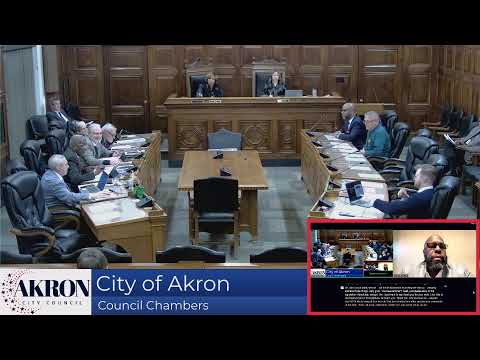
Council’s Public Safety Committee heard a presentation of a proposed hospital-linked violence intervention program (HVIP) that would contract with Akron Community Development Association dba Minority Behavioral Health Group (MBHG) to provide bedside intervention and follow-up services for victims of violent injury.
City staff framed the model as an evidence-based, trauma-informed approach that places trained, culturally trusted workers at the bedside to stabilize patients, create safety plans and connect families to services to reduce retaliation and future injury. The ordinance would fund a pilot with $73,000 budgeted for the first 12 months to support MBHG’s implementation and a dedicated HVIP coordinator.
Pastor Jeffrey Dennis, MBHG’s founder and CEO, described the program’s focus on building trust and providing clinical and community-based interventions; he cited Baltimore’s hospital-based model as an example and presented outcomes from that program (a claimed 83 percent reduction in reinjury among participants and more than 2,000 connections to services in the cited example).
Committee members asked how funds would support credible messengers and bedside access; presenters said credible messengers will work closely with coordinator Angelo Anderson and that the program includes training (the presentation referenced 160 hours of training for credible messengers) and multi-disciplinary coordination with hospitals.
The committee agreed to take one week to review the legislation and materials before final action.
Next steps: The HVIP ordinance was referred for one week so council members can review program materials, with staff and MBHG expected to return to committee with clarifying details and any requested supplemental documentation.