
Scott County reviews ADU and cluster-development drafts to protect farmland
Get AI-powered insights, summaries, and transcripts
Subscribe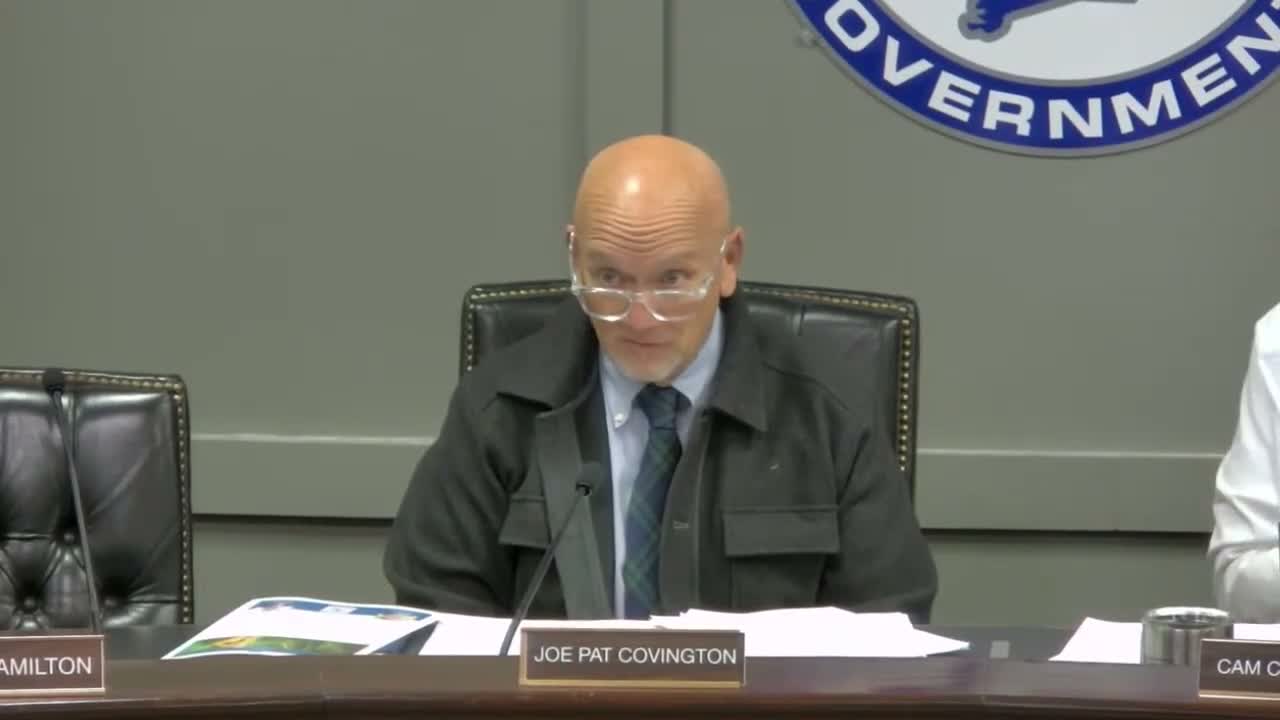
Summary
Scott County staff presented draft amendments to allow one accessory dwelling unit per qualifying parcel and to revise rural cluster rules so 50% of a development parcel is preserved; magistrates debated minimum preserved acreage, HOA conflicts, and design standards.
Scott County Fiscal Court on Dec. 5 reviewed staff-drafted zoning changes aimed at preserving prime farmland while expanding limited rural housing options.
Holden Fleming, a county planner, presented a draft accessory dwelling unit (ADU) ordinance and proposed revisions to the rural cluster development code. Fleming said the ADU draft would allow one ADU per parcel on qualifying lots and include technical limits intended to keep the unit incidental to the primary home: "An accessory dwelling unit is always gonna be smaller than the primary dwelling unit," Fleming said, and the draft encourages shared driveways and shared water connections to limit new access points.
The ADU draft includes an owner-occupancy rule so the property owner must live in either the primary dwelling or the accessory unit. Fleming said the provision is designed to prevent a single owner from "double dipping" and creating two rental units on a single lot. The draft also generally limits the distance between primary and accessory dwellings (300 linear feet) and allows variances for topographic constraints.
On cluster development, Fleming told the court the draft requires that "50% of [the original parcel] has to be preserved as one large tract" and that a housing unit remain associated with that preserved tract to avoid creating unmanaged conservation parcels without development credits. Staff said cluster development must be preceded by a rezone to the A-5 rural residential zone and that the county has not used the cluster tool frequently (the last recorded cluster in staff comments was 2016).
Magistrates debated several trade-offs. Some members urged a higher minimum preserved acreage (20–50 acres was discussed) to maintain rural character; others said allowing smaller individual lot sizes (down to 0.5–1.75 acres where soils and septic reserves qualify) and a flexible minimum would make cluster projects feasible for landowners and developers. Kelly Korman raised questions about conflicts with homeowners associations; staff responded that the county does not enforce HOA covenants and that those disputes remain private legal matters between property owners and their HOAs.
Fleming said the next steps could include initiating a zoning text amendment through fiscal court or letting the planning commission draft and hold the first public hearing. The court discussed holding a public meeting in January or February to gather additional public input before any formal adoption process.
The court did not adopt language at the work session; staff will revise the drafts based on feedback and schedule public outreach and hearings.