Get Full Government Meeting Transcripts, Videos, & Alerts Forever!
Get email alerts on the District Budget topic
No spam. Unsubscribe anytime.
RSU 05 board hears 9.82% 'status‑quo' budget projection; asks administrators for tiered scenarios
Summary
Superintendent Tom Gray told the RSU 05 board that a status‑quo fiscal 2027 budget would increase by 9.82% driven by contractual salaries, benefits and special‑education costs. The board asked administrators to prepare tiered scenarios (roughly 6%–8%) showing impacts on staffing and programs.
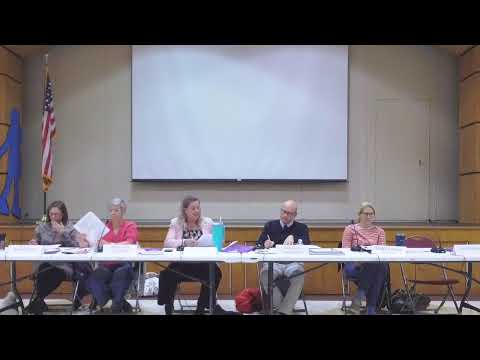
Superintendent Tom Gray told the RSU 05 board on Nov. 19 that, if the district holds staffing levels steady, projected salary and benefits costs and certain special‑education placements put next year’s budget increase at 9.82 percent.
Gray said that last year the district’s overall budget rose about 6.83 percent, and that the effect differs by town under the district’s cost‑sharing formula: Durham experienced about an 8.83 percent increase last year, Freeport about 4.95 percent and Pownal about 7.87 percent. He cautioned that town‑level impacts for 2027 cannot be finalized until state subsidy and revenue estimates are available.
Gray and finance staff explained that the 9.82 percent figure was the rollover effect on wages and benefits with current staffing; other expenditure categories — including an energy‑audit lease and commodity inflation — will alter the final total. Gray said reducing the projected increase to roughly 6 percent would require about $1.8 million in reductions, which he estimated could equate to roughly 17 teaching positions if reductions were concentrated in staffing. He emphasized he was not recommending cutting that many teachers, but used the example to illustrate scale.
Board members pressed for concrete scenarios. Several directors — including Kara, Stephanie and Danielle — said they would prefer to see what differing increases (4%, 5%, 6%, 7%, 8%) would mean in terms of positions, programs and service levels. Several members also urged that any higher near‑term increase be tied to a clear long‑term plan to return to a more sustainable trajectory.
Administrators said they would prepare tiered budget scenarios and impact analyses. Gray proposed taking guidance from the board to aim roughly around a 7 percent proposal with options above and below that number; he committed to returning with the tiered scenarios and to explain the values and criteria used to make any reductions so the board can reliably present and defend a number to the public.
The board also discussed offsets and one‑time uses of fund balance: an energy‑audit lease purchase was described as a multiyear, partially fund‑balanced plan that administrators expect to add roughly $300,000 annually to the budget in early projections but with some savings realized as projects came in under estimated costs.
Next steps: administrators will prepare and present tiered budget scenarios that show what each percentage increase would mean for staffing and programs, and they will attempt to provide town‑level impact estimates when state subsidy information becomes available.