
Carmel Unified reviews aligning graduation requirements with UC/CSU a–g standards
Get AI-powered insights, summaries, and transcripts
Subscribe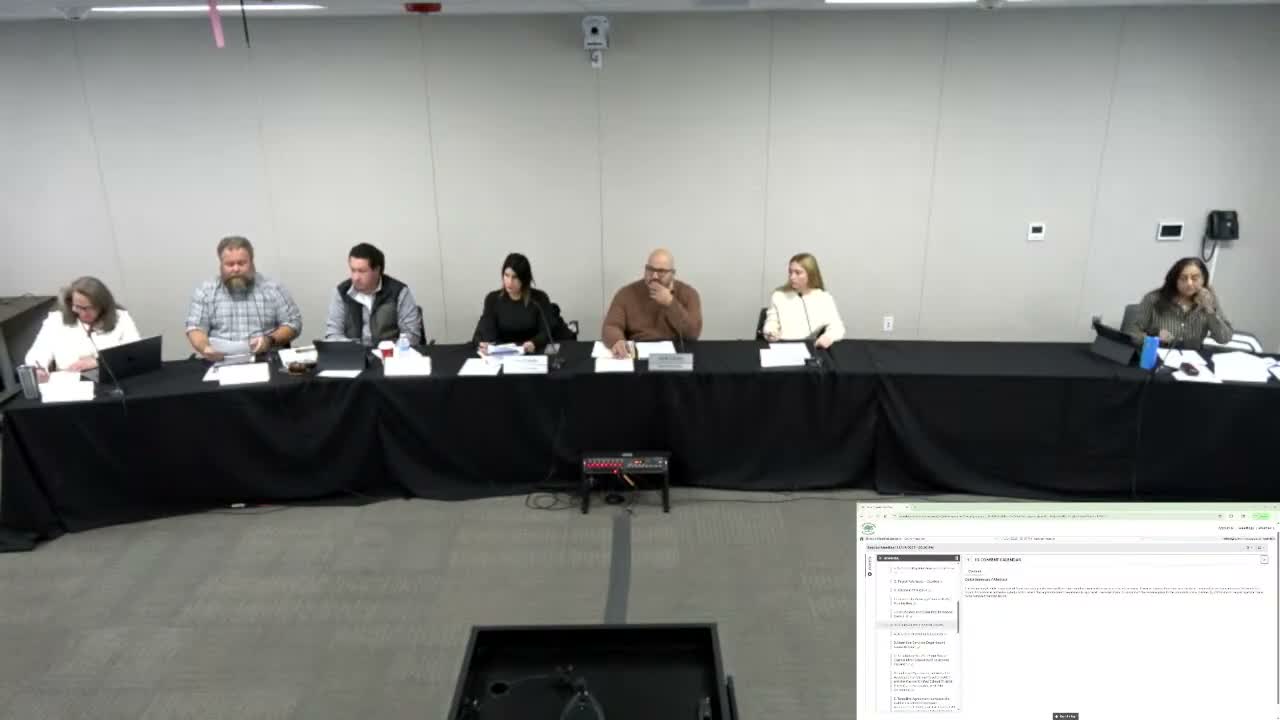
Summary
Deputy Superintendent Mary Petty and high‑school counseling staff briefed the board on 'a through g' alignment, data discrepancies between local systems and the state, and the rollout of a college‑and‑career platform that the district says is 95% aligned; trustees asked about minimum grade standards and impacts on non‑college‑bound students.
Deputy Superintendent Mary Petty and a team from Carmel High and Carmel Valley High presented an information‑only update on the district’s work to align Carmel High School graduation requirements with the University of California and California State University “a through g” college‑eligibility standards.
The presentation said Carmel High’s a‑through‑g completion historically hovers between about 70% and 80% and highlighted work to clean up course coding in the student information system (Aeries) to address discrepancies with the state DataQuest reports. Counselors and the district said a major driver of the reporting difference is course coding and cohort tracking — for example, students who leave the district but aren’t reported as enrolled elsewhere can remain on Carmel High’s books and affect local completion percentages.
“Most of our students end up completing the recommended level or even beyond,” the presentation said, and staff described a new college‑and‑career platform (CCGI) the district launched to align course codes with the UC/CSU portal. Presenters said the platform’s application data is about 95% aligned with the district’s course catalog because the system flags mismatches for staff review.
Trustees asked detailed questions about how the district measures credit and grades. Deputy Superintendent Petty and counselors clarified that the stated “d‑ minus” and “c‑ minus” minimums refer to the grade in a specific class, not a cumulative GPA. Trustees also raised equity concerns about raising the district’s graduation minimum (now a d‑ minus) to a c‑ minus to match UC/CSU minimums and asked how that would affect students who are career‑bound rather than college‑bound.
Staff said the alignment work includes submitting remaining courses for UC approval, strengthening counseling supports, and tracking students earlier (starting in eighth grade) so those who want to become a‑through‑g eligible can access pathways and credit‑recovery options. Counselors said dual‑enrollment options and partnerships with Monterey Peninsula College (MPC) support students returning to a‑through‑g eligibility.
Because this was an information‑only presentation, the board did not take action. The district said it will continue the course‑coding cleanup, report additional alignment progress next year, and return with any policy changes for formal consideration.
Next steps: district staff plan additional data clean‑up, final UC course submissions in the UC portal (next open window in February 2026), and continued review of graduation requirements through an equity lens.