Get Full Government Meeting Transcripts, Videos, & Alerts Forever!
Get email alerts on the Alternative Programs topic
No spam. Unsubscribe anytime.
Hardin County Board hears overview of alternative and adult‑education programs serving students and community
Summary
Director of alternative programs Wes Blair briefed the board on home hospital instruction, dropout‑prevention programs, the eSchool adult virtual program, Excel for teen mothers, KECSAC partnerships and adult‑education consortium achievements.
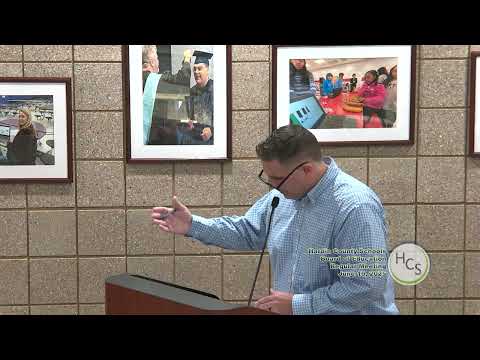
At the Hardin County Board of Education meeting, director of alternative programs Wes Blair gave a detailed overview of the district’s alternative education and adult‑education services and highlighted recent outcomes.
Blair said the home hospital program serves students with medical diagnoses that prevent school attendance and follows Kentucky Department of Education guidance. Teachers contracted to the program provide two hours of instruction for every five instructional days required by law. Blair said the program typically serves 40–80 students at a time.
Blair described Hardin County High as a dropout‑prevention program focused on fourth‑ and fifth‑year seniors and students struggling in traditional settings. He reported 182 graduates from that program in the 2024–25 school year and noted the use of credit‑recovery platforms (Apex and Edgenuity).
The district’s eSchool serves adult learners ages 18–21 seeking diplomas; Blair said 18 students graduated from that program last year and annual enrollment typically ranges from about 60 to 100. Blair also described the Excel program at the College View campus in Elizabethtown, led by Michelle Reynolds, which serves teen mothers (capacity 10) and provides on‑site child care and door‑to‑door transportation; nine students graduated from that program last year.
Blair said Hardin County serves as the fiscal agent for a five‑county adult education GED consortium (Hardin, LaRue, Grayson, Breckenridge and Hart counties) and noted the program’s state recognition and top rankings for GED attainment. He named Laura Lane as the new adult‑education coordinator and said 21 Hardin County employees work within the consortium.
The director also described contracted education services provided at Spectrum Care Academy (a private residential treatment program in northern Elizabethtown with 18 beds), Hardin County Day Treatment (operated by the Department of Juvenile Justice), and Lincoln Trail Hospital’s DCBS facility (three units, 82 bed capacity). He said the district employs staff at those sites and receives SEEK and KECSAC funding and other grants to support the services.
Blair recognized Julie Stith, an English teacher at Hardin County Day Treatment, who recently received the Roy L. Chapman KECSAC Outstanding Teacher of the Year award for work with state agency children.
Board members thanked Blair and praised the programs’ role in keeping students engaged and providing second‑chance pathways. One board member asked about the size of the GED population; Blair and others noted the district serves a substantial number of older community members and highlighted outreach and re‑enrollment barriers.
The presentation was informational; the board did not take separate policy action on the programs during the meeting.