Get Full Government Meeting Transcripts, Videos, & Alerts Forever!
Get email alerts on the Electronic Voting topic
No spam. Unsubscribe anytime.
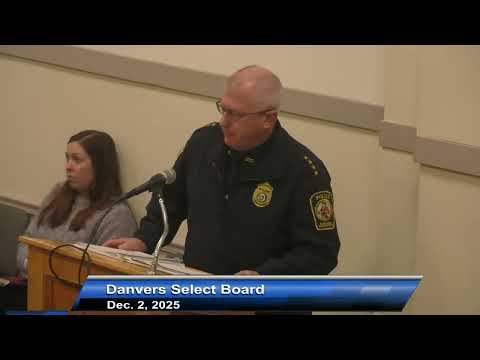
Danvers board directs bylaws and cost analysis for electronic town‑meeting voting; moderator stresses guardrails
Summary
After a lengthy debate weighing transparency and potential costs, the Select Board directed the town manager to draft two warrant articles (one authorizing electronic vote tabulation and one for funding) and requested a complete cost and time analysis and related procedural rules ahead of a possible vote at next year’s annual town meeting.
The Danvers Select Board on Dec. 2 authorized the town manager to draft two bylaw warrant articles to enable the use of an electronic vote tabulation system (handheld devices, commonly called “clickers”) for representative town meeting, and asked town staff to produce a complete cost and time analysis, operational protocols, and proposed rules of use for town meeting members and the moderator.
Supporters told the board electronic voting would improve accuracy, accountability and accessibility, and could modernize the town meeting experience. Select Board Member Mike said the system would make votes more reliable and could encourage participation. Opponents urged caution and called for a more thorough vetting of costs, process impacts and potential unintended consequences. Select Board Member Garland (member names appear in the transcript as variations) warned that in Danvers the current voice/standing vote process has produced more than 700 recorded town‑meeting votes over a decade with no reversal of voice‑vote outcomes.
Town Moderator Pat Fraser, who was present, advised that the moderator controls the method and means of voting during a town meeting under state law and that procedural rules must be written if the town is to use electronic devices. She recommended the Select Board and moderator jointly appoint a small working group to produce operational procedures; she noted she should not serve as a formal member of such a committee but would participate in planning conversations.
The board’s direction requires the town manager, working with the town clerk and moderator, to draft (1) a bylaw amendment authorizing electronic voting at town meeting and (2) a funding warrant article for purchasing or renting equipment and covering implementation costs. The board amended the motion to require a complete accounting of all costs and operational impacts (including staffing, check‑in/out procedures, expected added meeting time per vote, and whether votes would be recorded by voter) and requested that the work be ready for consideration in time to present bylaw language at the annual town meeting next May, if feasible.
What the board asked for: a bylaw text, a funding plan (purchase or rental), a security and chain‑of‑custody plan for devices, pre‑meeting testing protocols, and an operational plan that clarifies when and how the moderator may call for electronic voting versus standing or roll‑call votes. The board also asked for an estimate of ongoing annual fees and any training or staffing needs.
Next steps: town staff will draft bylaw language and cost estimates and circulate them to the Select Board for review; any bylaw would still require town meeting approval and, if adopted, funding to be included in a future budget or special‑warrant process.