Get Full Government Meeting Transcripts, Videos, & Alerts Forever!
Get email alerts on the Public Way 17 Elm topic
No spam. Unsubscribe anytime.
Developer vows fixes after stop‑work concerns; board sets Dec. 16 check‑in if sidewalk, scaffolding not remediated
Summary
Developer and contractor told the Danvers Select Board a temporary sidewalk and protective scaffolding are in place at 17 Elm Street and that remaining items can be addressed by the board’s Dec. 15 deadline; building official Tim Hudon and town engineer warned repairs may require more extensive repaving and scaffolding changes and the board asked for a written schedule and required the developer to appear Dec. 16 if not signed off.
Nancy McCann, representing the developer for the 17 Elm Street project, told the Town of Danvers Select Board on Dec. 2 that the contractor had installed a temporary asphalt sidewalk and pedestrian protective scaffolding and reopened the street. She said the currently permitted 60‑day extension (granted Oct. 21) runs through Dec. 15 and that the team expects to complete the remaining items within that window and finish final sidewalk work in May 2026.
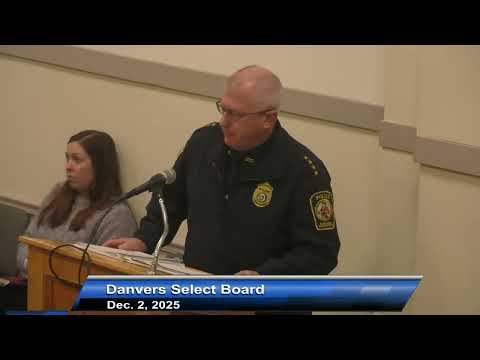
The board heard a substantially different assessment from Timothy Hudon, the town’s building official, who said a stop‑work order issued Nov. 5 arose from deviations from the approved plans. Hudon told the board the scaffolding “did not meet either the barrier or the overhead protection requirements” and that “the asphalt needs to be completely removed” in some areas so the substrate can be regraded and repaved to meet ADA cross slope and code tolerances. He said the scaffold and sidewalk work may continue under the public‑right‑of‑way rules but the stop‑work order on building construction will remain until structural plan approvals are resolved.
Contractor Tim Spencer, who installed the temporary sidewalk, disagreed that the work was unsafe and said the surface is “flat, smooth, and safe,” while acknowledging that some slope tolerances exceeded the regulatory tolerance by small margins. Spencer said he could make corrections in short order and testified he could accomplish the necessary remediation in two weeks.
Select Board members expressed two core concerns: (1) the lack of a written revised milestone schedule and (2) the absence at this meeting of the owner or general contractor despite earlier requests. Dan Bennett’s emailed complaint — read into the record by the town clerk — alleged repeated public‑way obstructions and deliveries left without traffic control. The board asked the clerk to forward Bennett’s email to the developer and general contractor.
Faced with differing technical assessments from inspectional services and the contractor, the board did not grant a further extension but instead directed that if the town engineer and building inspector have not signed off on the sidewalk and scaffolding by Dec. 15, the applicant must appear before the board on Dec. 16 with a representative who can answer scheduling and construction questions (the board asked that either the general contractor or the developer attend). The Select Board also requested a written schedule with firm dates (not the previously offered “May–June”) for completion of the permanent sidewalk and removal of scaffolding.
What happens next: inspectional services and the town engineer will re‑inspect the public way and scaffolding prior to the Dec. 16 meeting. If those officials sign off, the Dec. 16 slot will be struck from the agenda; if not, the applicant must explain why the Dec. 15 target was missed and provide a plan and accountable contacts.
Authorities cited in the meeting included building code and public‑right‑of‑way accessibility standards; Hudon stressed decisions are made against federal/provincial ADA/PROWAG and state building code tolerances rather than opinion. The Select Board reserved the option to consider fines or other remedies if the work extends past posted deadlines and if town bylaws support enforcement.