
Danvers advocates press for affordable units, spotlight 'dirty deeds' and a bill to strip racist covenants
Get AI-powered insights, summaries, and transcripts
Subscribe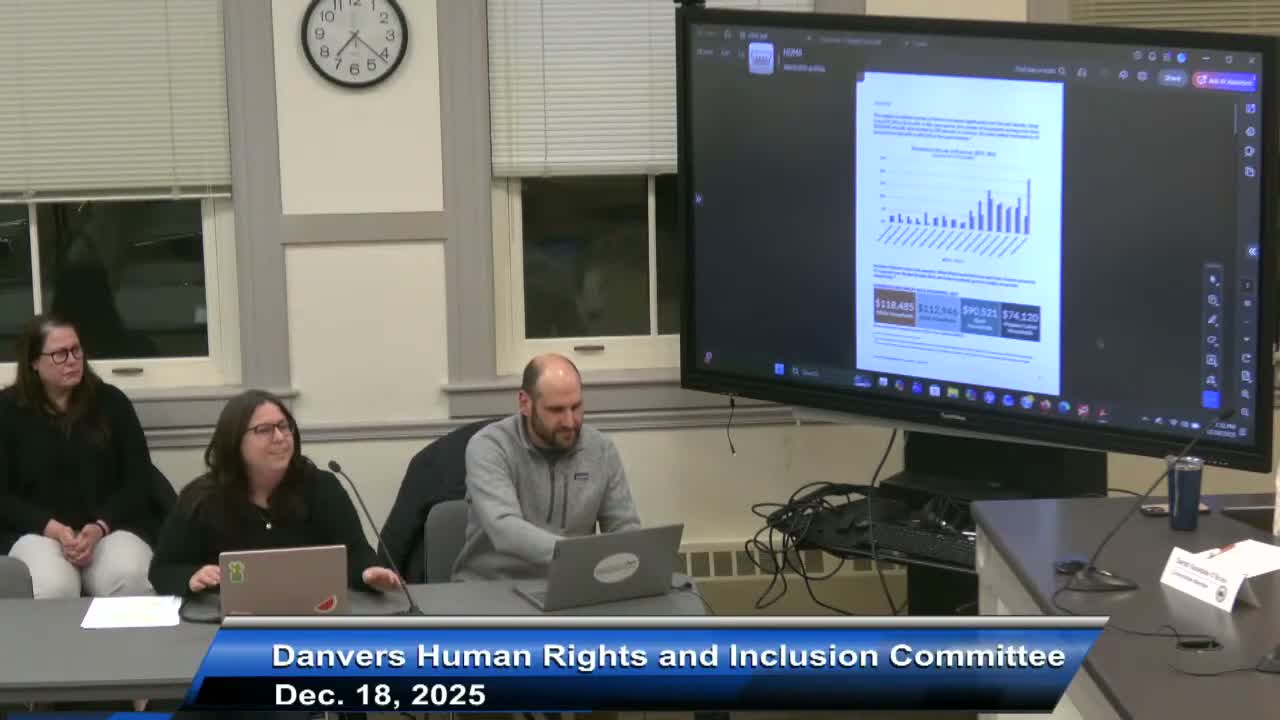
Summary
Affordable-housing presenters reviewed local housing data, promoted a Maple Square lottery of remaining affordable units and described historic racially restrictive deed language; advocates urged support for S.1080, a Massachusetts bill to let homeowners remove discriminatory language from property records.
At the Dec. 18 meeting of the Town of Danvers Human Rights and Inclusion Committee, local housing advocates laid out data on affordability and described historic discriminatory restrictive covenants discovered in deed records — often called "dirty deeds" — and urged local engagement and state-level action.
Lisa Silva, a member of the Danvers Affordable Housing Trust, presented town-specific housing statistics, noting a rise in median household income to about $116,000 while warning the figure is skewed by high earners. "The median house price in Danvers right now is about $670,000," Silva said, and she described sharp increases in listing prices and rents over the past decade. Silva told the committee Danvers requires 15% of new development units to be affordable, exceeding the state's 10% baseline, and highlighted a Maple Square lottery: 17 affordable units remain, applications are due Dec. 29, and the lottery is scheduled for Jan. 16.
Isis Patterson, representing Harbourlight Homes, connected local affordability to historic exclusionary practices. She described how redlining and racially restrictive covenants shaped neighborhood composition and wealth accumulation. Patterson said a review undertaken with the NAACP and others examined 567 deed documents across 10 communities and identified 146 deeds still containing racially restrictive language linked to 103 properties that exist today. She told the committee those clauses are not enforceable under modern law but remain on the record and are a continuing symbol of exclusion.
Patterson urged support for S.1080, "an act for the removal and void of restrictive covenants," which would create a process for registries of deeds to notify homeowners and allow them to remove discriminatory language from the public record when new or original certificates are issued. She described the proposed process as voluntary and intended to raise awareness so homeowners can choose to remove the language.
Committee members asked how removal would work and whether property owners typically know these clauses exist. Patterson said it is common for current homeowners not to know restrictive language appears in their title and that S.1080 would provide a clearer, voluntary pathway to address that.
Both presenters encouraged residents to attend planning board meetings and Affordable Housing Trust sessions to support projects and to use statewide resources such as the MassHousing Coalition and RAFT emergency rental assistance. The committee accepted the presentations and asked the presenters to share materials for the record.