Get Full Government Meeting Transcripts, Videos, & Alerts Forever!
Get email alerts on the Fee Assistance topic
No spam. Unsubscribe anytime.
West Sacramento proposes $11,500 pilot and 50% aid to broaden parks and rec access
Summary
Recreation staff presented a draft Fee Assistance Program to the Parks, Recreation and Intergenerational Services Commission proposing a $11,500 pilot, a default 50% cost‑share for eligible residents, two annual application windows, and multiple funding paths including vending revenue, a $1,500 foundation grant and a new online donation campaign.
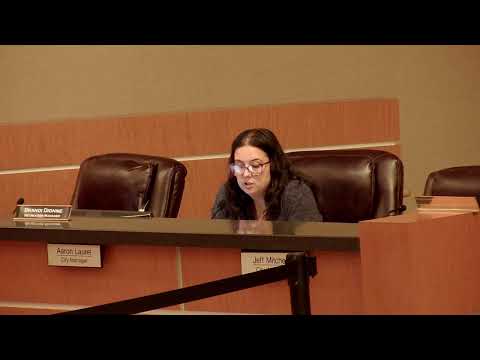
Recreation manager Brandy Dion presented a draft Fee Assistance Program to the Parks, Recreation and Intergenerational Services Commission designed to help West Sacramento residents afford recreation programming while the department implements a newly approved cost‑recovery policy. Dion said the pilot will launch with $11,500 and that staff have submitted a decision package asking city council to fund roughly $7,000 of that amount; the West Sacramento Foundation has also approved a $1,500 grant and a donation campaign will use the foundation’s Zephy app.
The proposal calls for two application periods per year, with both an online application (with an upload feature) and paper forms at city centers. Staff proposed using preexisting verification—enrollment in benefits such as SNAP/CalFresh or PG&E CARES—or, if needed, income documentation. Dion told commissioners the department plans a shared‑cost model in which approved applicants would receive 50% assistance toward program fees and a designated staff member would register successful applicants.
Commissioners focused on eligibility, allocation and sustainability. Dion outlined three allocation models — a flexible pool (first‑come, first‑served), equal distribution across age groups or program types, and a hybrid that starts equally then shifts based on demand. She provided program registration data showing youth accounted for about 54% of registrations, adults 18–49 about 33%, and people 50+ about 13%, and explained how $11,500 could be distributed (for example, 115 awards of $100).
Commissioner Jans urged a needs‑based approach and recommended giving staff limited discretion to grant larger awards for exceptional circumstances such as unhoused or foster families. “The goal being that, you know, no child or person goes without the opportunity, especially … youth,” Jans said. Commissioner Johnson asked for stronger privacy protections and for alternatives to online‑only access, and suggested exploring a utility bill “round up” donation; other commissioners recommended partnerships with the chamber, schools and local businesses for fundraising.
Staff proposed possible revenue streams to sustain the fund: a general‑fund decision package, vending and event revenue shares, one‑time donations via registration, sponsorships, and ongoing foundation fundraising. Dion said finance rules limit how program fees and donations are treated and that integrating contributions will require changes to registration software; staff said a new system being onboarded next year should make integration easier.
Dion emphasized the pilot nature of the program and recommended starting with a 50% assistance standard while preserving the ability to adjust the share (to 75% or 100%) if the fund grows. She also asked the commission whether to set individual or family caps, and whether to include or exclude certain program types (staff suggested excluding Discovery Preschool because it is already subsidized through Measure K). Dion said the department will advertise the program through normal communications channels and targeted monthly campaigns tied to specific programs.
The commission did not adopt formal policy changes during the meeting; commissioners provided guidance to staff on priorities — protecting applicant privacy, prioritizing youth access, testing a hybrid allocation model, and developing a clear outreach and fundraising plan — and asked staff to return with refined program rules and implementation details.