Get Full Government Meeting Transcripts, Videos, & Alerts Forever!
Get email alerts on the Medicaid Budget topic
No spam. Unsubscribe anytime.
DCH briefs committee on Medicaid trends, GLP‑1 spending and pending rural health grant
Summary
Georgia’s Department of Community Health told appropriators that Medicaid remains the agency’s largest budgetary item, highlighted pending CMS review of directed payment programs, flagged rising GLP‑1 prescription volume and costs, and said a $200 million/year rural health transformation grant application is awaiting CMS action.
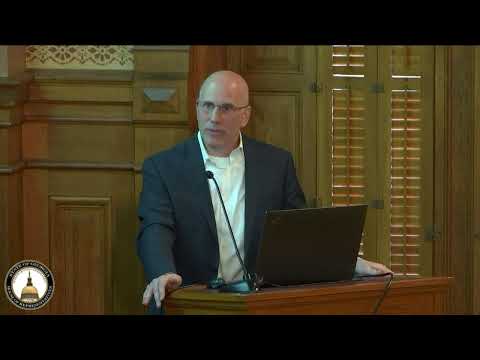
Dean Burke, Commissioner of the Department of Community Health, presented DCH’s FY‑2026 priorities and budget context to the Appropriations for Healthcare Committee, emphasizing Medicaid’s dominant share of spending and several pending federal decisions that could affect state costs.
Burke told members that DCH spends most of its funds on benefits and that roughly 97% of the agency’s dollars are used for benefit payments while only 3% support operations. "97% of our funds are spent on benefits with only 3% going towards operations," he said, using that breakdown to explain why Medicaid policy choices have outsized budget effects.
He flagged several items that could change the agency’s near‑term fiscal profile: state plan amendments submitted to CMS (one approval for CCBHC behavioral health centers is expected to go live early next year), a pending directed payment program review with CMS and a rural health transformation grant application. Burke described the rural proposal as a potential $200 million per year, five‑year federal grant to invest in rural Georgia and said DCH submitted an application before the deadline and is awaiting CMS’s line‑by‑line decisions.
Pharmacy and utilization were an extended focus. Burke said GLP‑1 class medications have shown exponential growth in prescriptions and cost, and DCH plans to require a care‑management bundle and coaching tied to GLP‑1 coverage after the new year to reduce waste. "We're implementing a kind of care management bundle on GLP1s going forward after the first of the year," he said, and added the approach aims to pair prescriptions with behavioral and lifestyle supports to sustain long‑term benefit.
On operational questions from members, Burke said DCH is working with CMS on neonatal reimbursement adjustments, collaborating with the Department of Human Services for eligibility and redetermination improvements and uses an inspector general office and analytic tools to detect Medicaid fraud, waste and abuse.
Members asked about provider contracting (including UnitedHealthcare network concerns), foster‑care MCOs, dental benefits and whether the state can target GME slots to rural areas. Burke said contractual disputes between payers and hospitals are outside DCH’s direct contract authority but that the agency will evaluate access implications; he also noted some state plan and procurement processes are subject to court or federal review.
The department did not request an immediate appropriation vote during the presentation; commissioners offered to return with follow‑up data on neonatal rate adjustments, enrollment projections and other technical items.
The committee moved to other agency briefings before recessing for lunch.