Georgia DECAL: Pre-K enrollment has fallen to about 68,000; state will study causes
December 18, 2025 | Appropriations, HOUSE OF REPRESENTATIVES, Committees, Legislative, Georgia
This article was created by AI summarizing key points discussed. AI makes mistakes, so for full details and context, please refer to the video of the full meeting. Please report any errors so we can fix them. Report an error »
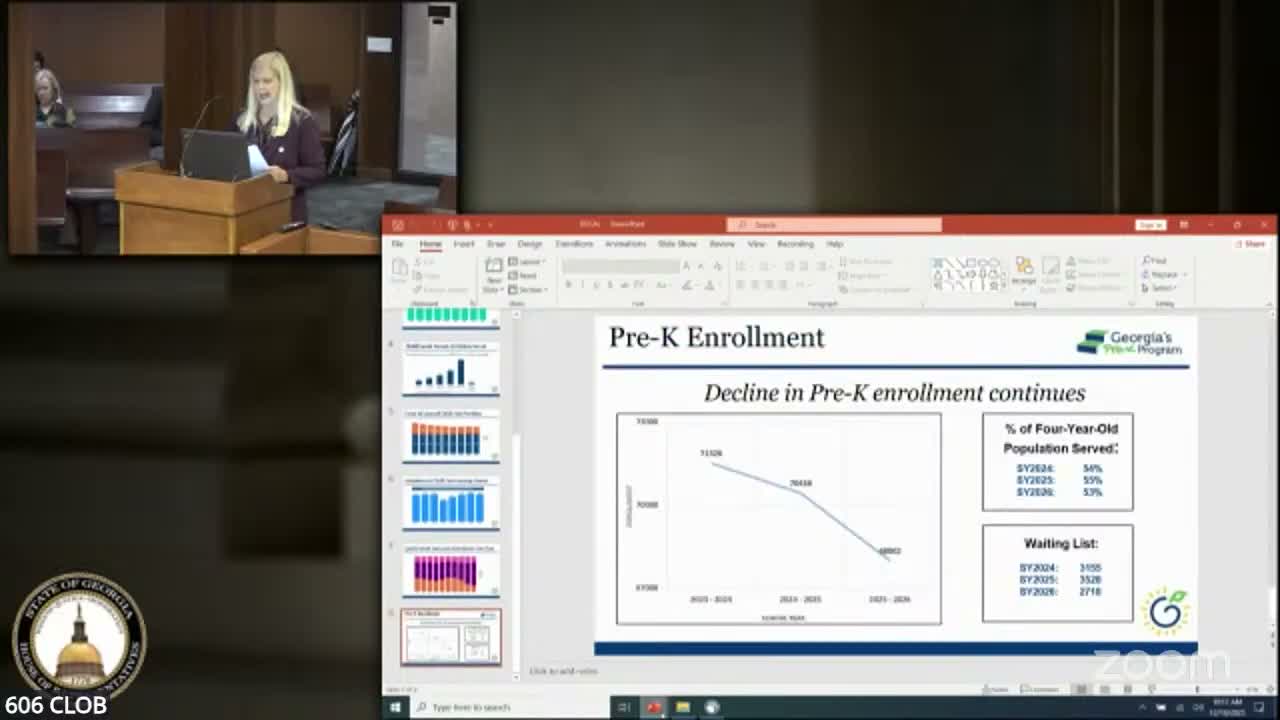
Commissioner Amy Jacobs (DECAL) said licensed capacity across Georgia now stands at roughly 389,000 seats and licensed programs number about 4,367. DECAL27s most frequently used child-level monitoring shows roughly 336,000 children served in licensed care, and quality-rated programs now number about 3,000 across the state.
Jacobs highlighted a key concern: Georgia Pre-K, a universal program for 4-year-olds funded by lottery dollars, has declined from pre-pandemic counts near 80,000 to about 68,000 this year. "We don't know exactly what's happening," Jacobs told members, noting that the slots remain available and that DECAL will study whether parent choice, shifting work schedules or residential moves are factors.
Lawmakers raised practical budget questions: whether Head Start counts are included in the Pre-K tally (DECAL said blended Head Start/Pre-K children are included where applicable), whether unused Pre-K lottery funding stays in the lottery fund (DECAL said surplus lottery dollars return to the lottery account), and whether start-up classroom funds and their geographic distribution could be documented. DECAL says it has funded startup support (roughly $30,000 per classroom) and added about 100 new classrooms per year under recent appropriations.
DECAL offered to follow up with county-level breakdowns of newly funded classrooms and Head Start reopening information requested by members. The agency framed the drop as part of a national, post-pandemic trend in K-12 enrollment and said it is preparing a targeted study of drivers and geographic variation.
Next steps: DECAL will provide the committee with follow-up numbers on Head Start participation in the Pre-K count, the distribution of startup classrooms by county and a briefing on lottery surplus accounting.
Don't Miss a Word: See the Full Meeting!
Go beyond summaries. Unlock every video, transcript, and key insight with a Founder Membership.
30-day money-back guarantee
Sponsors
Proudly supported by sponsors who keep Georgia articles free in 2025

