Get Full Government Meeting Transcripts, Videos, & Alerts Forever!
Get email alerts on the District Budget topic
No spam. Unsubscribe anytime.
Derry fiscal advisory reviews proposed budget; furniture, special-education and transportation costs top list
Summary
At a fiscal advisory committee meeting, Derry Cooperative School District administrators presented a proposed operating-budget framework that emphasizes recurring replacement cycles for furniture and whiteboards, flags volatile special-education and transportation costs, and seeks additional enrollment data before final decisions.
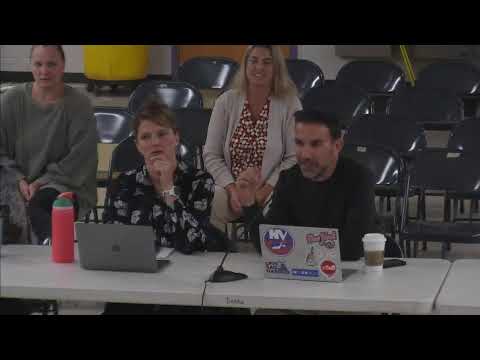
DERRY, N.H. — Administrators for the Derry Cooperative School District laid out early budget priorities and cost pressures at a fiscal advisory committee meeting, singling out classroom furniture and whiteboards as recurring needs, and warning that special-education tuition and transportation are driving budget uncertainty.
Superintendent Michael Flynn opened the session by describing a new, digital-first review process and urging committee members to "be curious and not judgmental" as principals and directors presented building-level requests and departmental lines. Flynn and staff described the districtwide budget at roughly $102,000,000, presented as an approximate figure for committee discussion.
The presentations focused on recurring, often overlooked items that have accumulated over years. At Ernest P. Barker, Principal Dave Brown said per-student allocations for PE and art remained low historically — "we spend $3 per kid in years past" — while the school needs a replacement exterior sign and several cafeteria tables. Grinnell Principal Melissa Lance said furniture upgrades and STEM-configurable tables are central to improving classroom flexibility and engagement. Several principals repeatedly noted that built-in whiteboards and kindergarten furniture are beyond their useful life and require replacement.
Special education emerged as a significant uncertainty. Superintendent Flynn warned that certain out-of-district transportation runs can cost "$400 a day" for a single student, multiplying quickly over a school year. Director of Student Services Laura Powers said out-of-district tuition "usually runs, I would say, average, probably about $120,000 to $130,000 per student" (not including transportation) and that the district currently serves roughly 75 students attending charter schools while remaining responsible for their services.
Transportation and technology budgets showed different trends. Dr. Clifton Dancy, director of information services and transportation coordinator, said the technology budget shows a net 0% increase after cuts to lower-value subscriptions, while transportation carries a contract-driven 6% increase tied to a multi-year agreement with a provider. Dancy also reported that First Student has deposited funds to build electric-bus infrastructure this year with electric buses expected to operate next year on regular-education routes.
The committee heard an explanation of the district's relationship with Next Charter School from Business Administrator Jane Simard. Simard said Next receives state adequacy payments directly and "with Next Charter School, we don't receive adequacy" for students who enroll there, a funding difference the district must account for when projecting tuition costs to other providers such as Pinkerton Academy.
Enrollment projections presented by Assistant Superintendent Joe Crawford were described as preliminary. Crawford said K'8 enrollment is projected at about 2,750 students (current internal count roughly 2,790) and provided building-level estimates; staff said the state's official Beginning of Year (BOI) data will be submitted this week and confirmed at the next meeting.
Committee members requested the worksheets and supporting data behind the enrollment figures and asked staff to present per-student operational cost breakdowns and staffing impacts at a future meeting. Flynn said those materials would be provided and that the committee would likely meet again in December to refine recommendations once state numbers and Pinkerton's tuition notice are available.
The meeting closed with a scheduling discussion; the superintendent proposed meeting after a Dec. 11 board meeting and staff agreed to circulate a confirmed date and materials in advance.
For now, the advisory panel's role is to digest the departmental requests and return with questions and recommendations, while administration prepares more detailed fiscal worksheets and state-verified enrollment counts.