
Wilsonville staff push code amendments to meet Senate Bill 974, council favors retaining DRB and wider notice radius
Get AI-powered insights, summaries, and transcripts
Subscribe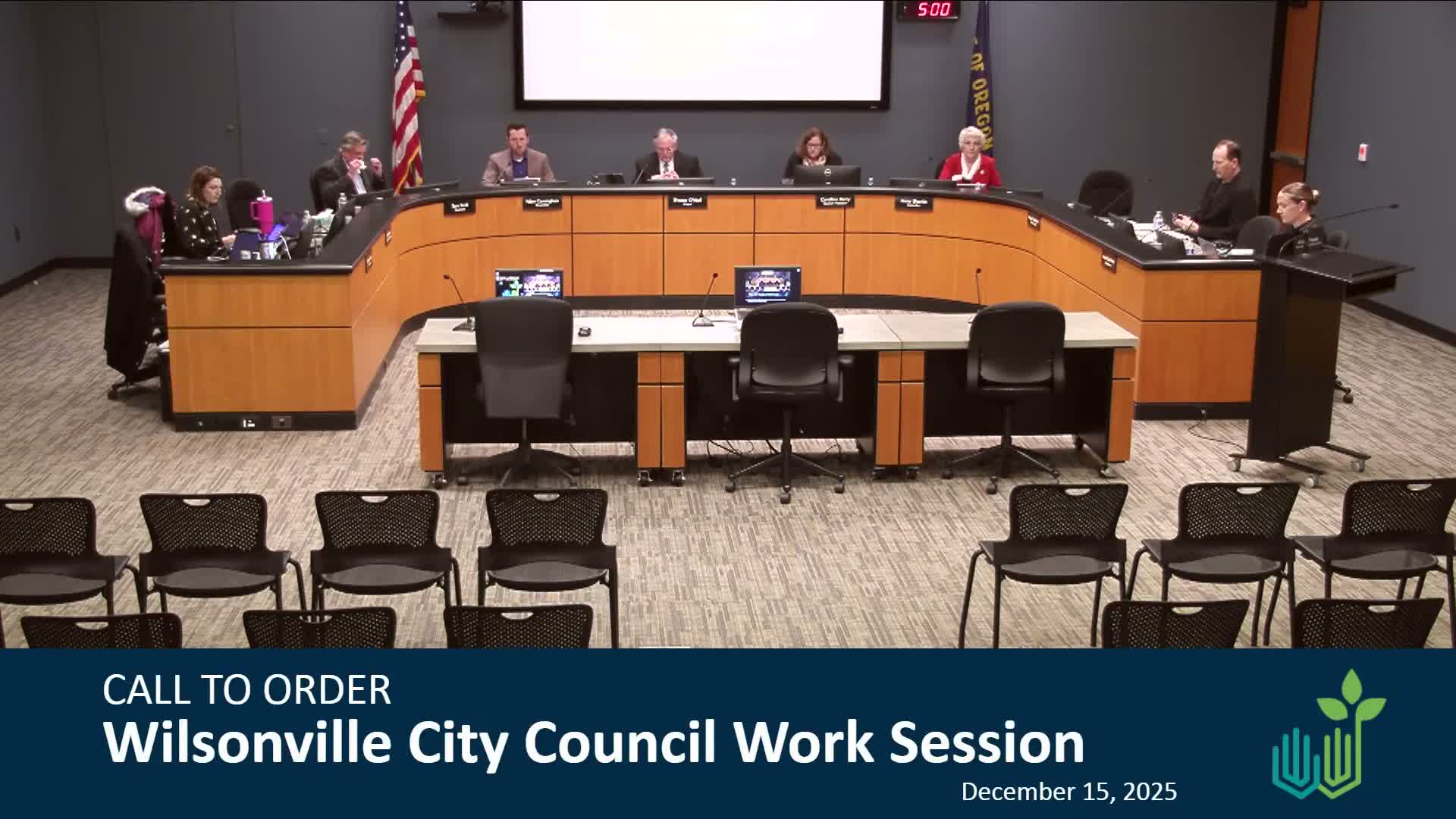
Summary
City planners presented draft approaches to align residential land‑use review with Senate Bill 974. Staff recommended expedited hearings for annexations in Frog Pond and consolidated administrative review for certain applications; council generally favored keeping one Development Review Board and maintaining a 250‑foot mailed‑notice radius rather than shrinking to the 100‑foot statutory minimum.
Wilsonville — City planning staff briefed the council on Dec. 15 about proposed development‑code changes to comply with Senate Bill 974 and sought council feedback on annexation handling, administrative review thresholds and notice rules.
Kim Reybould, senior planner, said the project is an early‑stage audit intended to inform draft code amendments to be presented in March. Because SB 974 requirements take effect July 1, 2026, staff emphasized an aggressive schedule and described a baseline set of changes: certain residential zone map amendments, stage‑1 and stage‑2 plan reviews, and application types that must be handled through an administrative Class 2 process rather than by hearing.
On annexations, staff recommended an expedited hearing process routed directly to city council for defined areas such as Frog Pond to match prior local practice; the planning commission agreed. For applications requiring comprehensive‑plan map amendments (infill situations), staff recommended retaining the current hearing process and DRB recommendation step because those decisions demand detailed findings and discretion.
A significant point of debate was mailed‑notice radius. Staff recommended aligning the mailed‑notice radius with state statute (100 feet) to reduce legal risk and appeals; several planning commissioners and multiple councilors favored preserving a longer local radius (250 feet) to ensure better community notice. Councilors also expressed interest in preserving a single DRB panel rather than two panels due to volunteer workload; staff agreed to evaluate options including suspension/backup procedures and training needs.
What’s next: Staff will return in March with draft code amendments and more detail on DRB structure, notification language and administrative thresholds. Council comments will be considered when preparing the draft amendments.
Sources: Staff presentation and discussion at the Dec. 15, 2025 council work session (Kim Reybould, Senior Planner).