Get Full Government Meeting Transcripts, Videos, & Alerts Forever!
Get email alerts on the Public Safety topic
No spam. Unsubscribe anytime.
Wilsonville staff to return with draft RV‑parking rules and pilot permit options after public safety review
Summary
City attorney and staff presented three enforcement options for RV parking and abandoned vehicles — a 72+24 rule, zone‑based limits (e.g., 48 hours), and an RV permit program — and council asked staff to draft policy language and a pilot approach for permits and shorter limits.
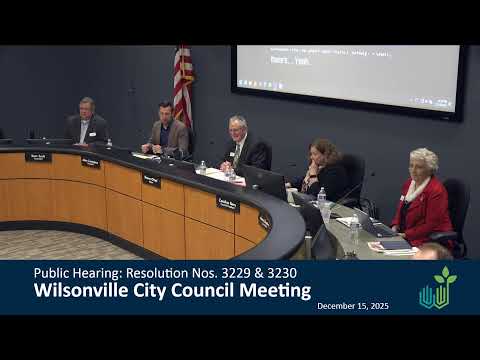
Wilsonville — City staff briefed the council Dec. 15 on options to address RV parking and abandoned vehicles in the public right‑of‑way and the council directed staff to prepare draft policy language for both shorter time limits and a pilot RV permit program.
Amanda Guile Hinman, the city attorney, said the public‑safety objective stems from council goals and an interdepartmental team including legal, police and code enforcement. Staff reviewed three alternatives: (1) a 72+24 rule (vehicles must move and remain away for 24 hours after a 72‑hour observation period), (2) differentiated time limits by zone (for example, a 48‑hour limit in residential areas), and (3) an RV permit program (several Oregon cities operate permit programs, typically limiting permits per year).
Hinman described outreach work: staff received more than 200 Let’s Talk Wilsonville responses, surveyed HOA groups and RV owners, and directly approached RV owners in the field. Results were mixed: many respondents favored maintaining current rules, while other groups favored permit programs or zone‑based adjustments. RV owners expressed concern about permit counts per year; staff noted some existing programs cap permits at six annually and suggested the city consider a higher cap or a pilot program before amending city code.
Council questions centered on enforcement on private property (staff confirmed local code changes only apply to city‑owned right‑of‑way), how permits would be issued (tied to a vehicle license plate and date‑stamped), loading/unloading windows (other jurisdictions commonly use 12 hours), and whether the program should be complaint‑based or proactively enforced (Gresham uses proactivity to improve compliance).
After discussion councilors asked staff to return with draft policy language for both approaches: a revised time‑limit option (for example 48 hours) and a permit pilot (with permit count and administrative details to be determined). The staff presentation and council direction were intended to inform drafting of development code or a short pilot resolution to evaluate effectiveness before any permanent code change.
Ending: Staff said they will draft policy language and return to council at a future work session (target: March draft code for housing items; separate schedule for RV policy to be determined).